

A true masterpiece doesn't just sit in a room; it anchors the soul of a home while quietly appreciating in value. While most interior elements lose their luster once installed, a hand-knotted heritage piece is one of the few functional objects that grows more precious with time. You recognize that a home should be a sanctuary of taste, yet the complexity of regional weaving and the risk of imitations often create hesitation.
This persian rug investment guide offers a refined framework to navigate the 2026 market with confidence. You'll learn to evaluate knot density, identify authentic natural dyes, and understand why specific provenance markers drive resale value. At JosmirLuxe, we believe in the synergy of historical artistry and modern luxury. We'll show you how to acquire timeless assets that transform your space into a gallery of enduring worth.
Key Takeaways
- Learn how heritage craftsmanship and material scarcity transform a hand-knotted piece into a "living asset" that appreciates over decades.
- Use this persian rug investment guide to master the evaluation of Kork wool, natural vegetable dyes, and knot density for long-term growth potential.
- Discover why authentic natural fibers offer a sustainable luxury alternative that maintains its structural integrity and aesthetic appeal for generations.
- Gain the confidence to integrate heritage weaves with contemporary designer furniture, creating a sophisticated synergy between history and modern living.
The Anatomy of an Appreciating Asset: Why Persian Rugs Transcend Decor
In 2026, any serious persian rug investment guide must begin with the distinction between mere decor and a financial asset. An investment-grade rug isn't just an essential part of Persian culture; it's a testament to material scarcity and historical weight. Unlike mass-produced items, these pieces possess a rarity driven by the dwindling number of master weavers capable of executing traditional designs with precision.
JosmirLuxe prioritizes hand-knotted natural fibers because they offer a lifespan that synthetics simply can't match. While oil-based machine rugs degrade within a decade, wool and silk foundations endure for centuries. This durability ensures the piece remains a "living asset," providing aesthetic utility in your home while the physical value matures. You aren't just buying a floor covering; you're securing a piece of history that improves with age.
Craftsmanship as a Barrier to Entry
A primary rule in any persian rug investment guide is recognizing the labor-intensive nature of the craft. A single palace-sized rug can represent years of daily weaving. This creates a natural barrier to entry for the market, as supply cannot simply be scaled to meet demand. This inherent scarcity is what drives long-term appreciation in a world of disposable goods.
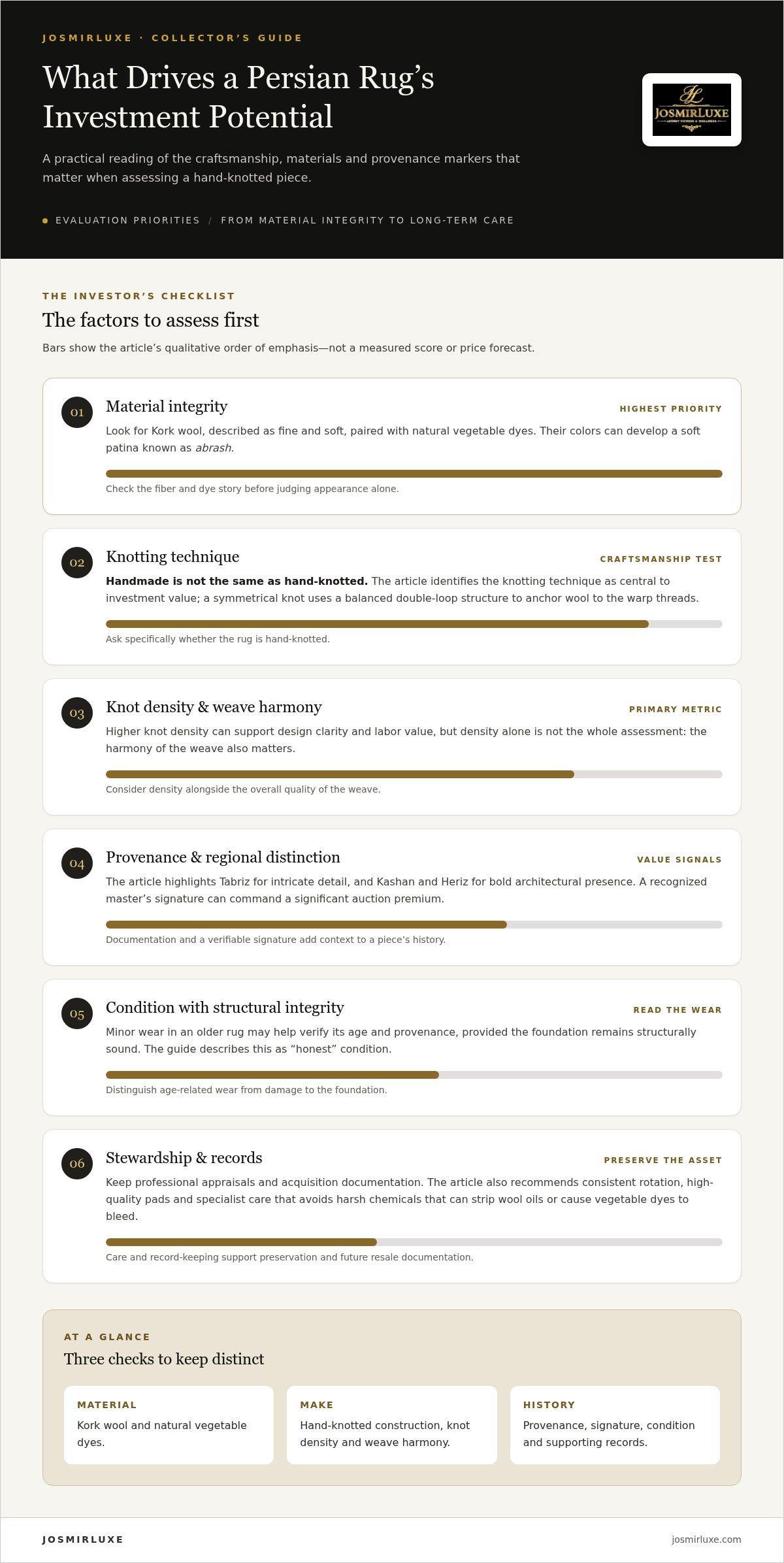
It's vital to distinguish "handmade" from "hand-knotted" heritage pieces to protect your capital. True investment value rests in the specific knotting technique rather than just manual assembly. The symmetrical knot is the gold standard for Persian durability because it anchors the wool to the warp threads with a balanced, double-loop structure.
The Investor’s Checklist: Identifying High-Growth Potential
Selecting a piece for long-term appreciation requires a disciplined eye. This persian rug investment guide prioritizes material integrity above all else. Seek out Kork wool; this fine, soft fiber harvested from the lamb's neck offers a lustrous finish that ages with grace. When paired with natural vegetable dyes, the colors develop a soft patina known as abrash. Synthetic alternatives simply cannot replicate this depth or organic evolution of tone.
Knot density serves as the primary metric for design clarity and labor value. While higher density often translates to greater market demand, it's the harmony of the weave that defines a true asset. For a master-grade example of how provenance and complexity converge, The Ardabil Carpet case study illustrates the pinnacle of historical knotting and scale. In the 2026 market, collectors also value "honest" condition. Minor wear in a century-old piece can actually verify its age and enhance its provenance, provided the foundation remains structurally sound.
Provenance and Regional Market Trends in 2026
Current demand focuses on specific weaving centers known for consistent technical excellence. Tabriz rugs remain a staple for their intricate detail, while Kashan and Heriz pieces are gaining traction for their bold, architectural presence. Signed rugs by recognized masters act like fine art signatures for valuation, commanding a significant premium at auction. These signatures provide an extra layer of security for your capital.
You can begin your journey by exploring the JosmirLuxe Persian Rugs collection, where each piece is curated for its investment potential and aesthetic grace. Identifying these high-growth markers ensures your selection remains a source of pride and profit for decades.
Curating Your Collection: Integrating Heritage into Modern Interiors
Integrating a heritage piece into a contemporary home requires a thoughtful balance of history and minimalism. A Persian rug shouldn't just exist in a space; it should define it. Use a large-scale weave to anchor your designer sectional sofas, creating a grounded island of texture within an open-plan layout. This strategic placement allows the rug’s intricate patterns to provide a warm, organic counterpoint to the clean, architectural lines of modern seating.
The interplay of textures is equally vital for building a cohesive home gallery. Consider the tactile contrast between the soft, dense pile of a master-grade weave and the cool, polished surface of luxury marble dining tables. This juxtaposition elevates the room from a mere showroom to a curated living experience. By following this persian rug investment guide, you ensure that each piece serves as a functional masterpiece that reflects a sophisticated, modern luxury lifestyle.
Stewardship: Preserving Your Asset for the Next Generation
Preserving the value of your asset requires a commitment to proactive care. Avoid generic cleaning services that use harsh chemicals; these can strip natural oils from the wool and cause vegetable dyes to bleed. Instead, opt for specialized heritage stewardship that respects the delicate nature of hand-knotted fibers. This persian rug investment guide emphasizes that maintenance is part of the asset’s appreciation strategy.
Maintain a detailed portfolio of professional appraisals and documentation for every acquisition. This record-keeping is essential for insurance purposes and maximizes resale value during future market cycles. Consistent rotation and the use of high-quality pads will protect the rug's structural integrity, ensuring it remains a beautiful and appreciating legacy for the next generation.
Securing Your Legacy in Hand-Knotted Art
A Persian rug is a rare intersection of historical narrative and financial wisdom. Through this persian rug investment guide, you've discovered how master-grade craftsmanship and material scarcity transform a functional object into a maturing asset. By selecting pieces with verified provenance and integrating them with contemporary design, you create a home that is both a sanctuary and a gallery.
JosmirLuxe remains dedicated to this vision, offering sustainable heritage pieces curated for the modern connoisseur. Each selection in our portfolio is expertly chosen for its aesthetic grace and long-term asset value. Explore the JosmirLuxe collection of authentic hand-knotted art. Your journey into the world of fine weaving is just beginning. The right acquisition will anchor your space for generations to come.
Connoisseur Insights: Frequently Asked Questions
Are new Persian rugs a better investment than antique ones in 2026?
Antique rugs generally hold a premium due to historical scarcity and the impact of long-standing import sanctions on Iranian heritage pieces. However, new rugs from master weavers represent the elite craftsmanship of tomorrow. This persian rug investment guide suggests focusing on material quality and provenance rather than age alone, as well-preserved contemporary pieces can appreciate significantly as global supply chains tighten.
How can I verify the authenticity of a hand-knotted rug online?
Authenticity is most visible in the structural details of the weave. Request high-resolution imagery of the rug's underside to inspect the individual knots; machine-made imitations lack the slight irregularities of human hands. Ensure the fringe is a natural extension of the warp threads rather than a separate attachment. At JosmirLuxe, we provide detailed documentation and expert curation to guarantee the heritage of every piece.
What is the expected ROI for a high-quality Persian rug over 10 years?
While specific returns vary based on market demand and condition, high-quality rugs are widely viewed as tangible assets that hedge against inflation. Rarity is a primary driver of value; as the number of master weavers declines, the supply of investment-grade pieces shrinks. Collectors often see steady appreciation as these functional artworks transition from contemporary items to sought-after semi-antique or antique heritage pieces.
Does the color or motif of a rug significantly impact its investment value?
Timeless motifs and natural vegetable dyes have a profound impact on long-term desirability. Classic patterns from renowned weaving centers like Kashan or Heriz tend to transcend passing interior trends, maintaining their status as stable assets. This persian rug investment guide recommends prioritizing traditional palettes and intricate designs, as these elements consistently attract connoisseurs and high-end auction houses during the resale process.