

An authentic hand-knotted rug is a living piece of cultural history, yet many owners treat these masterpieces like standard floor coverings. At JOSMIRLUXE, we believe that owning a genuine piece of artistry brings a unique sense of responsibility. You likely view your collection as a legacy, but the fear of dye migration or choosing the wrong cleaning agent can be paralyzing. This persian rug quality guide provides the refined techniques you need to act as a confident steward of your investment. It's about more than just cleanliness; it's about preserving a woven narrative for the next generation.
You'll master the art of maintaining structural integrity while protecting the vibrant soul of every hand-tied knot. We'll explore the essential rituals of professional care, from handling immediate spills with composure to ensuring long-term value protection. Discover how to elevate your home's atmosphere by honoring the craftsmanship beneath your feet and ensuring your investment remains as stunning as the day it first graced your space.
Key Takeaways
- Understand the vital role of organic lanolin in wool fibers and why avoiding harsh detergents is essential for preserving the heritage of your hand-knotted pieces.
- Master the "Dusting First" rule and pH-neutral spot restoration techniques found in this persian rug quality guide to handle spills with confidence and poise.
- Learn to identify the threshold for professional submersion baths while avoiding the structural risks and shrinkage associated with high-heat steam cleaning.
- Transition from a casual owner to a dedicated steward by implementing maintenance rituals that safeguard both the aesthetic beauty and the financial value of your JosmirLuxe collection.
The Art of Preserving a Woven Legacy: Why Material Quality Dictates Care
Owning a hand-knotted masterpiece is an act of cultural stewardship. Unlike mass-produced synthetic carpets that rely on petroleum-based fibers, these pieces possess a structural complexity born of nature. This persian rug quality guide highlights that your rug isn't just a decorative item; it's a living asset. High-quality wool contains lanolin, a natural oil that provides a vital protective layer. Harsh, alkaline detergents strip this organic shield away, leaving the wool brittle and susceptible to premature wear.
The history and artistry of the Persian rug reveals a deep reliance on organic vegetable dyes. These pigments remain sensitive to their environment for centuries. Exposure to aggressive cleaning agents can cause these "living" colors to migrate, permanently compromising the clarity of the design. Maintenance is a silent ritual of preservation. It protects the foundation from the "grinding" effect, where microscopic debris acts like hidden sandpaper, slowly severing fibers at the root.
Understanding the Vulnerability of Hand-Knotted Fibers
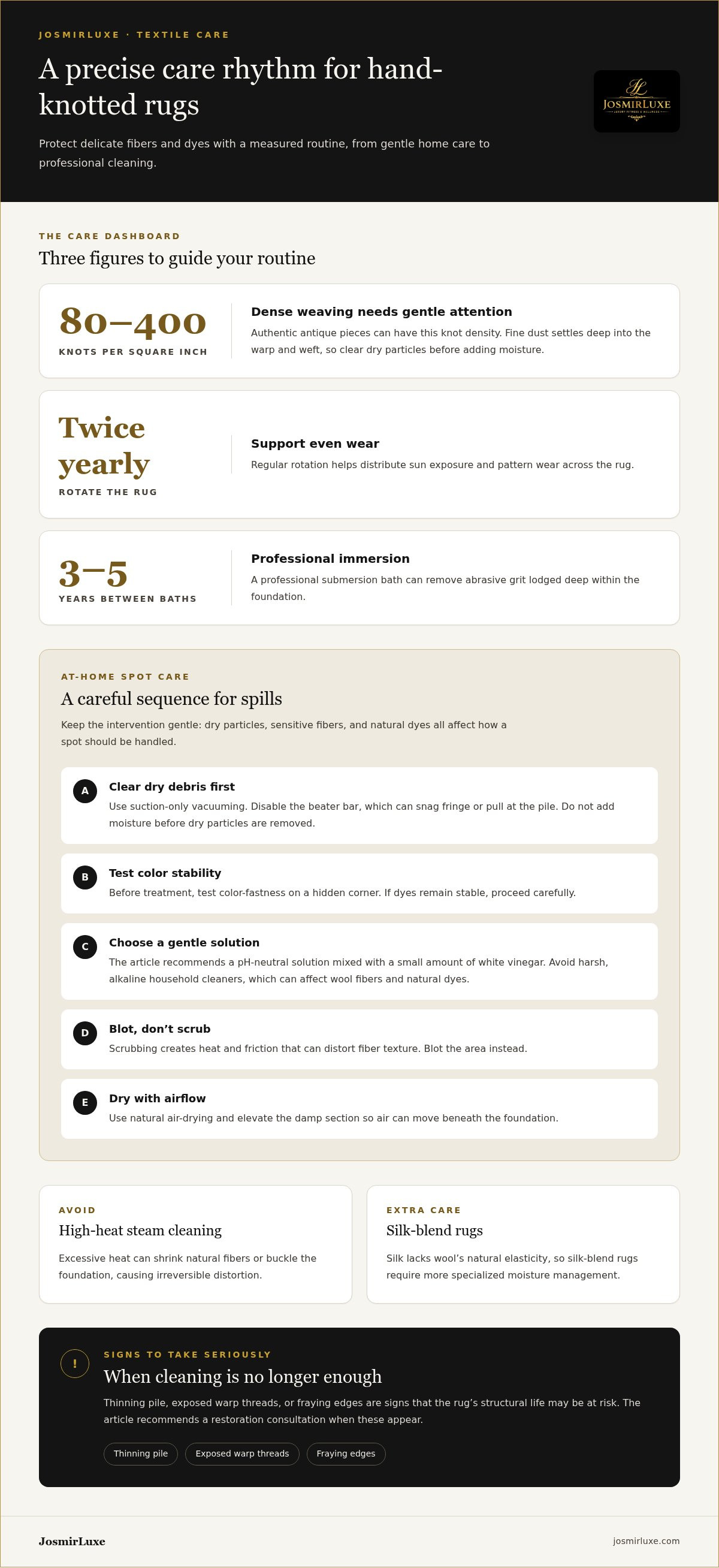
Knot density determines how a rug interacts with its surroundings. Authentic antique pieces often feature 80 to 400 knots per square inch, creating a dense landscape where fine dust settles deep into the warp and weft. Silk-blend rugs demand even more specialized moisture management, as silk lacks the natural elasticity of wool. At JosmirLuxe, we believe hand-knotted heritage is a synergy of material integrity and artisanal soul. Protecting this balance ensures your living space remains an elevated sanctuary of comfort and design.
A Refined Protocol for Home Maintenance and Spot Restoration
Proper maintenance begins with a disciplined approach to mechanical cleaning. Standard vacuuming etiquette requires disabling the beater bar; the aggressive rotation of these brushes can snag delicate fringe or pull at the pile. Instead, use a suction-only setting to gently lift surface debris. This persian rug quality guide emphasizes the "Dusting First" rule: never apply moisture to a rug that hasn't been thoroughly cleared of dry particles. Adding liquid to a dusty foundation creates a mud-like residue that settles deep into the warp.
When accidents occur, the chemistry of the solution is paramount. Standard household cleaners are often too alkaline for protein-based fibers like wool or silk. A refined approach involves using a pH-neutral solution mixed with a small amount of white vinegar. This acidity helps stabilize vegetable dyes, preventing the dreaded migration of color. Following expert textile conservation tips ensures that your intervention doesn't cause more harm than the original spill.
The Connoisseur’s Sequence for Refreshing Your Rug
Always perform a color-fastness test on a hidden corner before treatment. If the dyes remain stable, apply the "Blot, Don’t Scrub" technique. Scrubbing generates heat and friction, which can permanently distort the fiber’s texture. Once the area is clean, utilize natural air-drying techniques. Elevate the damp section to allow airflow beneath the foundation, preventing the stiffness and organic odors that arise from trapped moisture. To maintain a balanced aesthetic, rotate your rug bi-annually to ensure even sun exposure and pattern wear. Explore the collection to find pieces that resonate with your home’s evolving narrative.
Beyond the Surface: Stewardship of a Long-Term Investment
True stewardship involves recognizing when home maintenance reaches its limits. While regular vacuuming preserves the surface, a professional submersion bath is essential every three to five years. This persian rug quality guide suggests that professional immersion remains the gold standard for preservation, as it safely removes abrasive grit lodged deep within the foundation. Avoid in-home steam cleaning at all costs. The excessive heat from these machines can cause natural fibers to shrink or the foundation to buckle, leading to irreversible distortion. Consult expert guidance on textile care to understand the necessity of specialized handling for historic weaves.
Monitoring structural integrity is a vital component of any persian rug quality guide. Look for signs where simple cleaning should transition into a restoration consultation. Thinning pile, exposed warp threads, or fraying edges indicate the rug’s structural life is at risk. Addressing these issues early prevents minor wear from becoming a significant loss in value. A pristine rug isn't just an object; it's the foundation of a JosmirLuxe curated interior, where every element reflects a commitment to professional elegance.
Integrating Fine Textiles into an Elegant Lifestyle
A well-maintained Persian rug does more than cover a floor; it anchors the most luxurious elements of your home. The intricate patterns and organic textures provide a sophisticated counterpoint to the clean lines of luxury marble dining tables or the expansive comfort of designer sectional sofas. There's a profound emotional impact in a refreshed, vibrant palette. It transforms a room from a mere space into a high-end residential sanctuary. We invite you to explore how hand-knotted rugs complement a modern luxury lifestyle, elevating your everyday experience through timeless artistry.
Preserving Your Woven Legacy
Preserving a hand-knotted masterpiece requires a shift from simple maintenance to true stewardship. By respecting the chemical sensitivity of natural dyes and the protective role of organic lanolin, you ensure your investment retains its vibrancy for generations. This persian rug quality guide serves as a refined foundation for maintaining the structural integrity of your collection, balancing gentle home care with the essential ritual of professional deep cleaning.
At JosmirLuxe, we specialize in high-end lifestyle curation, offering a curated selection of authentic hand-knotted art. It's a collection that serves as the centerpiece of any refined interior. Our focus on investment-grade luxury furnishings ensures that every piece you choose is a testament to timeless craftsmanship. Discover the artistry of hand-knotted Persian rugs at JosmirLuxe and embrace your role as a guardian of these historic textiles. Your home is a living gallery. Treat every element with the reverence it deserves.
Frequently Asked Questions
Can I vacuum a Persian rug with a standard vacuum cleaner?
You can use a standard vacuum, but you must disable the beater bar to avoid damaging the delicate hand-knotted fibers. The aggressive rotation of brushes can snag the fringe or pull at the wool pile. Using a suction-only setting preserves the structural integrity described in our persian rug quality guide. Always vacuum in the direction of the pile to maintain a smooth, lustrous surface.
What is the best way to remove a wine spill from a wool rug?
Immediate action is essential for wine spills. Blot the area with a clean white cloth to absorb the liquid; never scrub, as friction distorts the fiber texture. Apply a solution of pH-neutral soap and white vinegar to stabilize the organic vegetable dyes. This acidity prevents color migration. Finally, elevate the rug to ensure airflow reaches the foundation, preventing dampness and odors.
Is it safe to use industrial steam cleaners on hand-knotted rugs?
Industrial steam cleaners are not safe for authentic hand-knotted rugs. The high temperatures and excessive moisture can cause natural wool or silk fibers to shrink significantly. Beyond surface damage, heat can buckle the rug’s foundation, leading to permanent structural distortion. For high-value investments, avoid any cleaning method that relies on intense heat or chemical-heavy vapor that might strip natural lanolin.
How often should a high-quality Persian rug be professionally cleaned?
A high-quality Persian rug generally requires professional cleaning every three to five years. This timeline ensures that deeply embedded grit, which acts like sandpaper against the warp and weft, is safely removed. A professional submersion bath is the preferred method for deep restoration. Regular maintenance, as outlined in this persian rug quality guide, helps extend the intervals between these deep-cleaning rituals while maintaining aesthetic brilliance.