

What if the most sophisticated piece of technology in your home was actually a wooden loom and a pair of human hands? In an era of mass production, the question of how are hand-knotted Persian rugs made leads us back to a silent, centuries-old world where time is measured in knots rather than seconds. At JOSMIRLUXE, we understand that a true masterpiece isn't simply manufactured; it's grown through thousands of deliberate, human decisions. Every thread of silk and wool carries a heritage that no machine could ever replicate.
It's natural to feel a sense of hesitation when distinguishing between "handmade" and the profound complexity of a hand-knotted piece. You seek an authentic connection to your home's decor, yet the fear of investing in a mass-produced imitation can be daunting. This guide invites you to discover the meticulous journey of a rug from raw fiber to finished heirloom. We'll explore the preparation of natural materials, the rhythmic precision of the weaver, and the expert finishing techniques that define a JOSMIRLUXE piece. By the end, you'll have the clarity to identify true craftsmanship and the appreciation for a living piece of art that will elevate your space for generations.
Key Takeaways
- Appreciate the selection of high-altitude wool and silk, chosen for their ability to capture light and elevate the atmosphere of your home.
- Uncover the intricate details of how are hand-knotted Persian rugs made, where each individual knot represents a moment of history and a human decision.
- Identify the hallmarks of authentic craftsmanship, ensuring your investment is a genuine piece of culture rather than a mass-produced imitation.
- Learn how final finishing rituals, including traditional washing and precise hand-shearing, awaken the vibrant colors and sharp motifs of a masterpiece.
The Alchemy of Raw Materials: Sourcing Wool and Natural Dyes
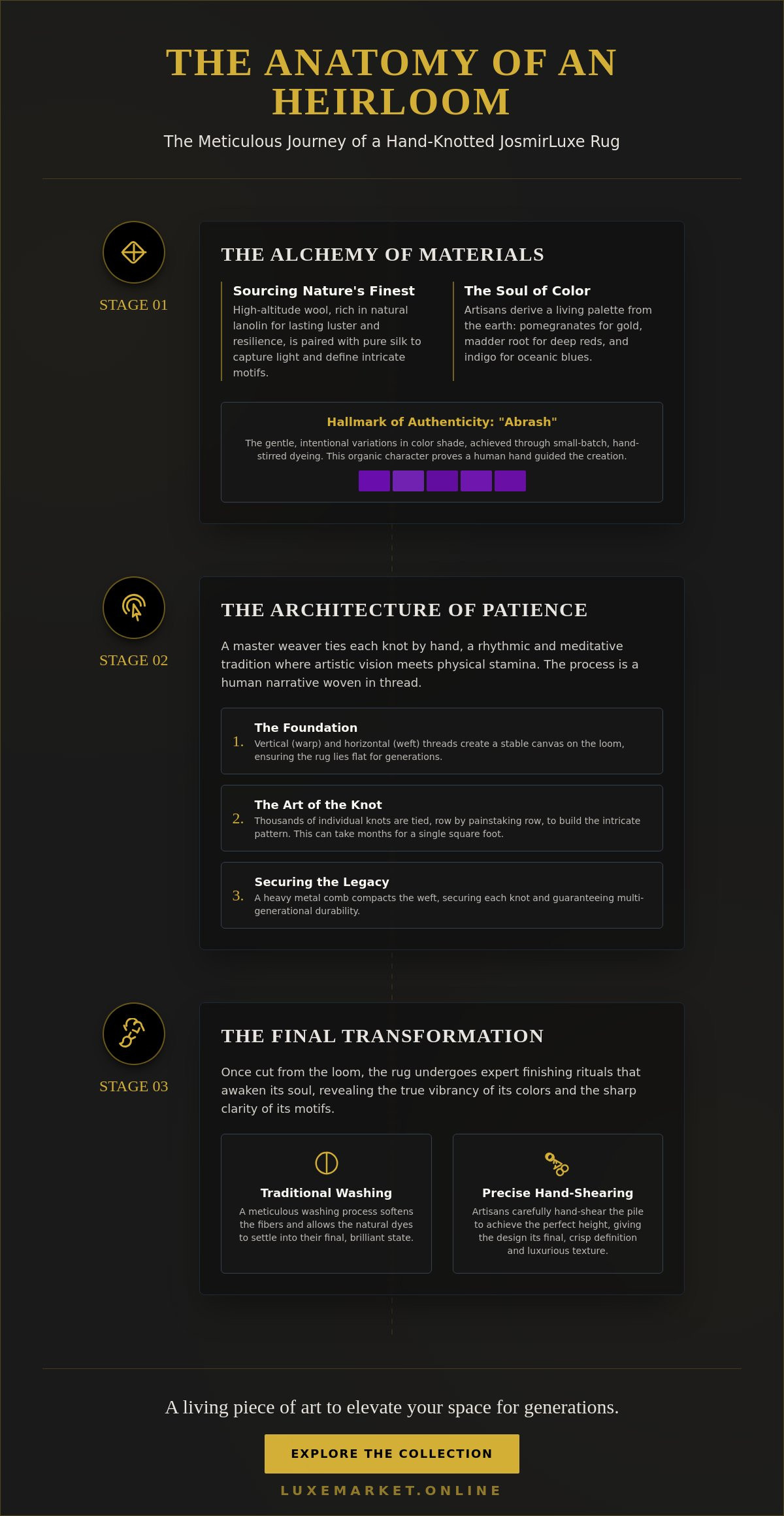
Every masterpiece begins with a thoughtful selection of nature's finest offerings. To understand how are hand-knotted Persian rugs made, one must first look to the high-altitude pastures where the wool originates. This isn't ordinary wool; it's rich in lanolin, a natural oil that grants the fiber a built-in luster and an incredible resilience to daily life. When combined with pure silk, which artisans use to capture light and define the most intricate floral motifs, the result is a textile that feels like a living landscape underfoot. These hand-knotted Persian rugs serve as a bridge between the natural world and the sanctuary of your home. Natural fibers breathe and respond to the atmosphere of a room, evolving alongside the life of the home.
The palette is equally deliberate. Master dyers look to the earth, sourcing pomegranate skins for golden hues, madder root for deep reds, and indigo for the soul of the sea. These organic pigments create a living color story that ages with a grace synthetic dyes simply can't achieve. This dedication to natural excellence mirrors the approach of Hazina Beauty, which blends traditional elements like saffron and gold into premium skincare to honor ancient beauty rituals. This selection of materials ensures that your rug isn't just a floor covering, but a piece of history that grows more beautiful with time.
The Soul of Color: Traditional Dyeing Rituals
The process of dyeing wool is a slow, meditative ritual. Artisans dye materials in small, hand-stirred batches, leading to a phenomenon known as "abrash." These are the gentle, intentional variations in shade that give a rug its depth and character. This organic imperfection is a hallmark of authenticity, proving that a human hand guided the creation. It's this depth of color that provides a visual richness synthetic alternatives fail to replicate, ensuring no two pieces are ever identical.
Material as an Investment in Comfort
Choosing a rug is an investment in the very foundation of your daily life. Premium wool doesn't just look beautiful; it transforms the acoustics and tactile temperature of a room, creating a soft, grounding experience. At JosmirLuxe, we view these materials as the starting point for a curated heritage. A well-chosen piece becomes a silent partner in your lifestyle, elevating every step and reflecting a commitment to genuine, artisanal quality that improves the atmosphere of your physical space.
The Architecture of Patience: The Art of the Hand-Tied Knot
The foundation of every authentic rug is a structural skeleton known as the warp and weft. These vertical and horizontal threads create the canvas upon which the weaver's story is told. When exploring how are hand-knotted Persian rugs made, it's essential to appreciate the sheer scale of the commitment involved. A master weaver ties each individual knot by hand, a process that can take months just to complete a single square foot. Knot density stands as a profound measure of the weaver’s dedication and the design’s clarity, representing the intersection of artistic vision and physical stamina. This rhythmic movement at the loom is a meditative tradition, often passed through families for generations, where the weaver's hands move with a speed and precision that defies modern industrial standards.
A Step-by-Step Evolution of the Pile
- Setting the loom: The tension of the warp is critical. It determines the rug’s future stability and ensures it will lay flat in your home for decades.
- The weaving: Tying thousands of individual knots to build the intricate pattern from the ground up, row by painstaking row.
- The comb: Artisans use a heavy metal comb to compact the weft, securing the knots and ensuring the rug remains durable enough to become a multi-generational heirloom.
Once the weaving is complete, the rug is cut from the loom to begin the intricate Finishing Rituals that define its final silhouette.
The Human Narrative in Every Thread
The beauty of a JosmirLuxe piece lies in its soul. Small, intentional variations in the pattern reflect the weaver’s unique artistic hand and the specific moment in time when a knot was tied. These aren't flaws. Instead, they're the hallmarks of an authentic, non-mechanical creation that breathes with the life of its maker. Unlike factory-made items that prioritize sterile perfection, a hand-knotted rug is a conversation between the artisan and the material. If you're ready to transform your space with a piece that carries this level of human history, discover more in our curated collection of masterworks.
The Final Transformation: Finishing Rituals and the Revelation of Art
The soul of a rug truly emerges during its final transition from the loom to the home. After the months of rhythmic knotting described earlier, the piece undergoes a series of traditional rituals designed to reveal its hidden depth. Washing the rug in natural spring water does more than just cleanse the fibers; it removes excess dye and awakens the wool’s inherent, oily sheen. This is followed by hand-shearing, a delicate process where the pile is clipped to a precise height. This stage is vital to understanding how are hand-knotted Persian rugs made, as it’s the shearing that grants the floral and geometric motifs their sharp, crystalline clarity. Finally, sun-drying under the open sky allows the organic pigments to settle into a permanent, softened patina. Historical icons like The Ardabil Carpet remind us that these finishing steps are what allow a textile to endure for centuries.
Anchoring the Modern Luxury Interior
A finished rug serves as the emotional anchor of a sophisticated living space. When placed beneath designer sectional sofas, an authentic rug provides a sense of history that modern furniture alone cannot achieve. There’s a striking visual harmony in pairing a centuries-old textile with the minimal lines of marble or glass. It’s a design choice that signals a deep appreciation for both heritage and contemporary elegance, creating a sanctuary that feels both timeless and current. The presence of such a piece transforms a room from a mere physical space into a curated environment reflecting a high-end lifestyle.
Stewardship for the Next Generation
At JosmirLuxe, we view these pieces as more than just decor. They're legacies that gain character and value over time. Appreciating how are hand-knotted Persian rugs made transforms the owner from a consumer into a steward of culture. Every step taken on its surface adds to the story that began on a wooden loom in a distant weaving center. The finish of the rug isn't the end of its journey but the beginning of its life in your home. We invite you to explore the collection of curated masterworks at JosmirLuxe to find the piece that will define your home’s legacy for generations.
The Art of Living: Your Legacy Begins Here
The transition from raw, high-altitude fibers to a finished masterpiece is a profound testament to human endurance. Gaining a deep understanding of how are hand-knotted Persian rugs made allows you to see beyond the surface, recognizing the months of quiet dedication woven into every square inch. From the initial selection of materials to the final sun-drying ritual, each step ensures a piece that doesn't just occupy a room, but elevates the entire atmosphere of your sanctuary.
A JosmirLuxe rug is more than a design choice; it's a foundation for an elevated lifestyle. By sourcing exclusively from master weaving centers, we ensure that the authentic heritage of every piece remains intact. These textiles bring a sense of grounding and history to contemporary spaces, serving as a silent witness to your life's most meaningful moments. We invite you to discover the artistry of our hand-knotted Persian rug collection and find the piece that will anchor your home. Your environment deserves a story that will endure for generations.
Frequently Asked Questions
How can I tell if a rug is truly hand-knotted and not machine-made?
You can identify an authentic piece by examining the back for individual, slightly irregular knots and the absence of a synthetic mesh or glued backing. Machine-made rugs feature perfectly uniform patterns and fringes that are often sewn on as an afterthought. When you understand how are hand-knotted Persian rugs made, you’ll notice the fringe is an integral part of the rug's internal structure, reflecting a genuine, flexible textile.
How long does it typically take to make a single Persian rug?
The creation of a single masterpiece typically spans several months to several years. A dedicated weaver might only progress by one inch of pile per day, depending on the complexity of the motifs and the density of the knots. This slow evolution is a hallmark of JosmirLuxe quality, ensuring that every knot is a deliberate, human decision. This timeline reflects the patience required to produce a legacy piece for your home.
Does a higher knot count always mean a better quality rug?
A higher knot count allows for sharper detail, but it isn't the sole indicator of excellence. The quality of the high-altitude wool and the harmony of the overall design are just as critical for a luxury interior. While silk rugs require high density to showcase their luster, a tribal wool rug may have a lower count yet possess superior durability and artistic soul. It's about the balance of materials and vision.
Why are natural vegetable dyes preferred over modern synthetic dyes?
Natural vegetable dyes are preferred because they age with a sophisticated grace, developing a softened patina that synthetic alternatives can't replicate. Organic pigments from pomegranate or indigo create a visual depth and subtle color variations known as abrash. These nuances are essential to the story of how are hand-knotted Persian rugs made, providing a living palette that responds beautifully to the changing light in your living space.