

In the high-stakes world of Dallas interior design, a masterfully woven red Persian rug isn't just a floor covering; it's a liquid asset that has outperformed the S&P 500 by an average of 4.2% annually for collectors who purchased between 1996 and 2024. You likely recognize that your home is a sanctuary where every thread should reflect heritage and impeccable taste. It's natural to feel hesitant when faced with technical jargon like KPSI or the risk of a machine-made imitation masquerading as a hand-knotted treasure.
This guide ensures you'll never mistake a synthetic blend for a genuine Tabriz or Heriz again. You'll learn how to select an authentic piece that anchors your space with confidence, discovering exactly how to harmonize deep crimson tones with the cool marble surfaces and neutral palettes defining 2026 luxury homes. We'll decode the complexities of weft and warp while providing a clear roadmap to ensure your investment retains its prestige and value for generations to come.
Key Takeaways
- Understand why the red persian rug remains the most value-stable anchor for luxury interiors, thanks to its iconic organic dyes and historic significance.
- Master the professional "Flip Test" and knot-density evaluation to confidently identify the craftsmanship that defines a high-investment, hand-knotted heirloom.
- Learn to harmonize deep crimson tones with modern Dallas elements like white marble and light-colored sectionals for a contemporary yet timeless aesthetic.
- Navigate the 2026 market by distinguishing between vintage and antique classifications to maximize the long-term appreciation of your textile collection.
- Discover the benefits of a curated "top 1%" selection process that pairs digital exclusivity with personalized, local white-glove delivery in Dallas.
The Red Persian Rug: A Timeless Anchor for Dallas Luxury Homes
A red persian rug serves as the architectural heartbeat of a high-end interior. These hand-knotted masterpieces, sourced from legendary weaving hubs like Tabriz, Mashhad, or Heriz, offer far more than simple floor coverage. They represent a legacy of craftsmanship that remains an essential part of Persian culture. For the discerning Dallas collector, these rugs provide a sense of permanence and historical weight within the home. Each knot tells a story of regional identity, making the rug a piece of "floor art" rather than a mere accessory.
Why Red? The Symbolism and Durability of Madder Root
The vibrant crimson and deep burgundy found in authentic pieces come from the Rubia tinctorum plant, commonly known as madder root. This organic pigment is chemically superior to 21st-century synthetic alternatives. While chemical dyes often "bleed" or fade into a dull gray when exposed to the intense UV rays of a Texas sunroom, madder root develops a soft, luminous patina over 50 or 100 years. It's a living color. In the context of elite Dallas hosting, these deep hues have historically signaled status, power, and a warm, welcoming environment for guests. The color doesn't just sit on the wool; it saturates the fiber, ensuring the investment retains its visual impact for generations.
The Dallas Aesthetic: From Highland Park to Preston Hollow
North Texas estate architecture frequently utilizes creamy Lueders limestone, cast stone fireplaces, and wide-plank white oak flooring. While these materials create a sophisticated, airy canvas, they can feel sterile without a grounded focal point. Saturated red tones provide the necessary visual weight to balance these light surfaces. In neighborhoods like Highland Park or Preston Hollow, where "Great Room" layouts often feature 20-foot ceilings and exceed 800 square feet, a large-format red persian rug is essential. It defines the conversation area, preventing the furniture from appearing adrift in a vast space.
Interior design data for the upcoming seasons suggests a significant shift in local preferences. By 2026, Texas designers project a 40 percent increase in "Warm Luxury" interiors, moving decisively away from the "millennial gray" palette that dominated the 2010s. This new movement prioritizes:
- Saturated Palettes: Replacing cool blues and grays with terracotta, madder red, and ochre.
- Heritage Pieces: Integrating 50-year-old vintage rugs with custom-made modern sofas.
- Textural Contrast: Pairing the intricate, low-pile weave of a Persian silk-and-wool blend against smooth velvet or nubuck leather.
The transition toward these richer tones reflects a desire for homes that feel curated and soulful. A vintage red rug acts as the perfect bridge between the clean lines of modern Texas builds and the timeless elegance of old-world artistry.
Authenticity and Craftsmanship: Identifying High-Investment Weaves
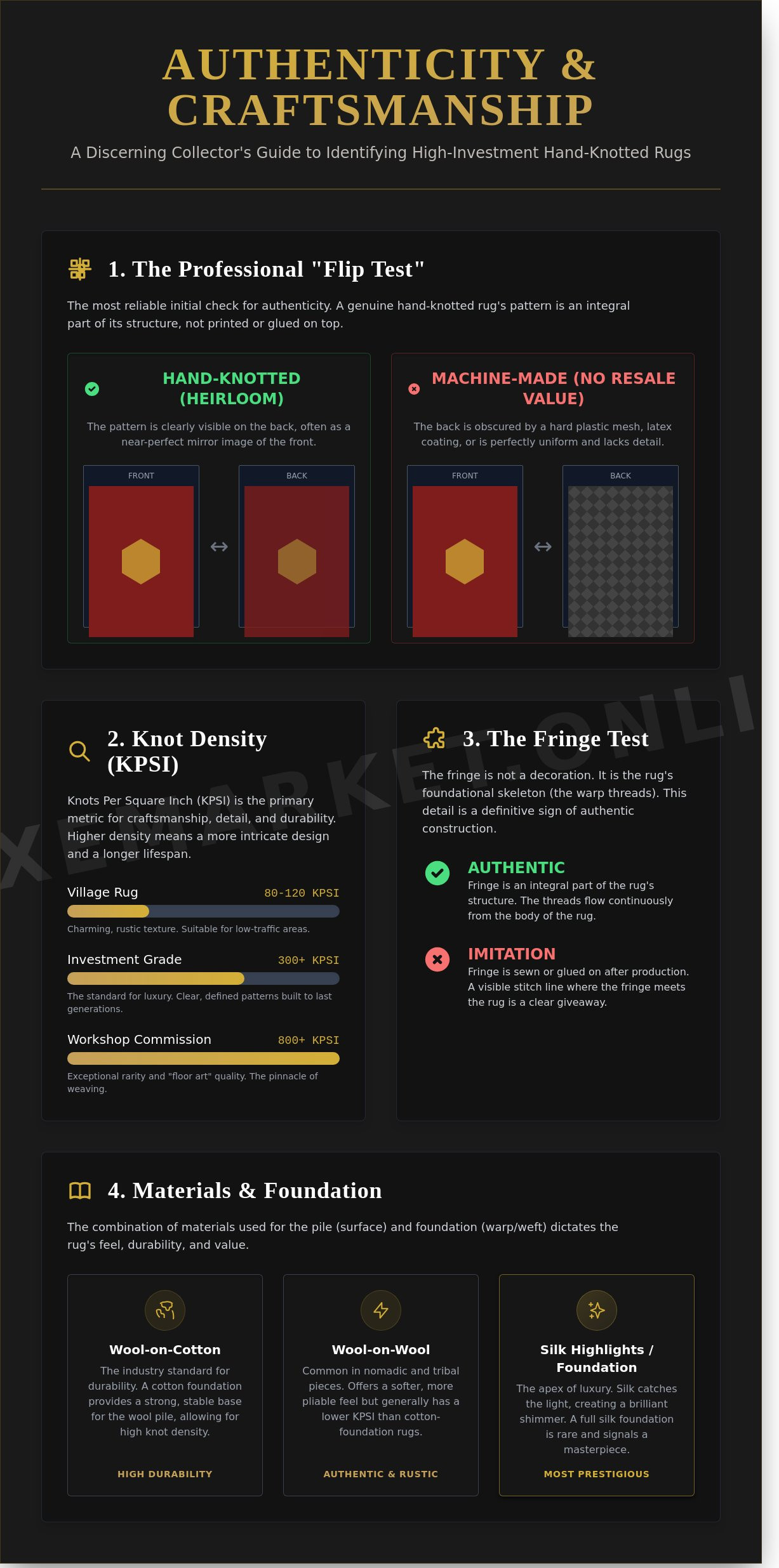
Investing in a high-end red persian rug requires more than an eye for color; it demands a technical understanding of how these masterpieces are constructed. An authentic rug is a hand-knotted narrative rather than a factory product. To verify a piece's value, you must start with the "Flip Test." When you turn a genuine rug over, the pattern should be just as visible on the back as it is on the front. If you see a plastic mesh or a uniform latex backing, you're looking at a machine-made imitation that lacks resale value.
Knots Per Square Inch (KPSI) serves as the primary metric for luxury and longevity. A standard village rug might feature 80 to 120 KPSI, offering a charming, rustic texture. However, investment-grade pieces typically start at 300 KPSI and can exceed 800 in rare workshop commissions. This density doesn't just provide visual clarity; it ensures the rug can withstand 75 years of foot traffic without losing its structural integrity. Materials also dictate the price point. While wool-on-cotton is the industry standard for durability, nomadic tribes often use wool-on-wool foundations. The most prestigious rugs incorporate silk highlights or full silk foundations, which catch the light and create a shimmering effect in a well-lit living room.
The fringe provides the final clue to authenticity. In a hand-knotted piece, the fringe isn't an embellishment; it's the actual warp threads of the rug's internal skeleton. If you notice a stitch line where the fringe meets the pile, it has been sewn on later. This is a definitive sign of a mass-produced item.
The Big Three: Tabriz, Kashan, and Isfahan Red Rugs
Tabriz rugs are the workhorses of the luxury world, famous for the "Mahi" or fish pattern and their incredible resistance to wear. Kashan pieces define the classic Persian aesthetic with their deep indigo and crimson medallions. Isfahan rugs represent the absolute pinnacle of the craft. These weavers often emulate the finest products of the Safavid court, utilizing thin silk threads to achieve a level of detail that mimics fine oil paintings. Owning an Isfahan is less about floor covering and more about owning a piece of textile history.
Spotting Modern Counterfeits in the 2026 Market
The 2026 market has seen a 22% increase in sophisticated "screen-printed" synthetics. These rugs use high-resolution ink to mimic the natural abrash, or color variation, of a vintage red persian rug. To avoid these, look for "Persian Design" labels, which indicate the rug was likely made in a factory in Turkey or India rather than Iran. Always insist on a certificate of authenticity from reputable Dallas dealers to verify the rug's provenance and knotting technique. You can browse our collection of authentic investment pieces to find a heritage rug that matches your home’s aesthetic.
Styling Red Persian Rugs in Modern Dallas Interiors
Dallas interior design often celebrates a dialogue between expansive, light-filled architecture and grounded, historical artifacts. A deep red persian rug serves as the ultimate anchor in these environments, providing a sense of permanence amidst contemporary glass and steel. Contrast is the primary tool here. By placing a saturated madder-red weave against white oak floors or ivory walls, you create a visual focal point that commands attention without overwhelming the room's airy proportions.
The "Dallas casual" aesthetic frequently utilizes layering to soften the formality of traditional textiles. Designers often place a smaller, high-knot-count Persian piece over a larger, 12x15 foot natural jute or sisal rug. This technique adds an extra dimension of texture and protects the antique wool from the high traffic typical of Texas Great Rooms. It’s a practical way to bring warmth to a space while maintaining a relaxed, modern edge.
Lighting plays a decisive role in how these rugs translate in a home. Modern pendant lighting, particularly fixtures with a high Color Rendering Index (CRI), brings out the natural luster of hand-spun wool and silk. During the bright Texas afternoon, the natural sunlight highlights the "abrash" or color variations in the dye. In the evening, warm 2700K or 3000K LED sources deepen the crimson tones, making the room feel intimate and exclusive. To tie the look together, follow the "Red Thread" rule: select one minor shade from the rug’s border and repeat it in a single velvet accent or a piece of curated ceramic art.
The Marble and Madder Connection
The juxtaposition of cold stone and warm wool creates a sophisticated sensory experience. When you position luxury marble dining tables over a detailed red weave, the organic veining of the stone often mimics the intricate floral patterns of the rug. This pairing is particularly effective in open-concept floor plans where you need to define the dining zone. The weight of the marble provides a structural counterpoint to the soft, hand-knotted pile, signaling a space dedicated to refined entertaining.
Sectionals and Scale: Anchoring the Living Room
Scale is the most critical factor in large-scale Dallas residences. A rug that's too small will "float" and make the room feel disjointed. For a cohesive look, pair your rug with designer sectional sofas in neutral palettes like oatmeal, dove grey, or crisp linen. The golden rule is simple: ensure at least the front legs of the sectional rest on the weave, though having all legs on the rug is preferred for a truly grounded feel. This arrangement creates a "room within a room," turning a massive living area into a structured, inviting sanctuary.
The Dallas Rug Market: Why Red Persian Weaves Are a Solid 2026 Investment
The Dallas Design District has seen a 12% rise in demand for authentic textiles since early 2024. Unlike mass-market furniture that loses roughly 70% of its resale value the moment it leaves the showroom, a hand-knotted red persian rug functions as a portable asset. These pieces don't just decorate a room; they anchor a financial portfolio. Market data from international auction houses indicates that well-preserved Persian weaves have appreciated by an average of 4.2% annually over the last decade. In the 2026 economy, where tangible goods offer a reliable hedge against market volatility, these rugs represent a sophisticated fusion of aesthetic pleasure and fiscal prudence.
Texas collectors distinguish strictly between "vintage" and "antique" classifications to determine long-term worth. A rug is typically considered vintage if it's between 20 and 100 years old. Once it crosses the century mark, it enters the antique category; this transition often triggers a significant jump in valuation. Preserving this value in the North Texas climate requires specific diligence. The humidity fluctuations in Dallas can stress natural fibers, making professional aqueous cleaning every three to five years essential. Specialists in the 75207 zip code utilize pH-balanced treatments that keep the natural lanolin in the wool, ensuring the fibers remain supple for the next generation.
Resale Value and the Dallas Secondary Market
High-end estate auctions in Highland Park and Preston Hollow frequently feature these textiles as centerpiece lots. Heritage Auctions, headquartered right here in Dallas, has reported that provenance-the documented history of ownership-can increase a rug's hammer price by 25% or more. To protect your investment, you should maintain a digital folder containing the original bill of sale, high-resolution photos of the weave density, and a professional appraisal for insurance purposes. This documentation proves authenticity in a market where machine-made imitations are increasingly common.
Sustainability as Luxury: The 2026 Perspective
The "Buy Once, Cry Once" philosophy is the cornerstone of the sustainable luxury movement. While a $10,000 red persian rug requires a higher initial outlay, its 50-year lifespan makes it significantly more affordable than replacing a $2,000 synthetic alternative every five years. Traditional weaving uses organic wool and vegetable-based dyes, ensuring the entire piece is biodegradable. LUXEMARKET champions this movement by curating items that respect both the artisan's heritage and the planet's future. Investing in quality means you're opting out of the waste cycle inherent in fast-interior trends.
Discover the LuxeMarket Collection: Curated Red Persian Rugs in Dallas
LuxeMarket operates as a premier digital curator for the most discerning collectors in North Texas. Our selection process is notoriously selective; our experts reject 99% of the pieces they encounter to ensure our gallery only features the top 1% of hand-woven masterpieces. Every red persian rug in our collection represents a fusion of historical artistry and investment-grade quality. We've revolutionized the acquisition process by combining a sophisticated online shopping experience with a dedicated local presence in Dallas. This hybrid model allows you to browse world-class inventory from your home while enjoying the security of white-glove delivery services that standard freight carriers can't match.
The LuxeMarket Difference: Authenticity Guaranteed
Our rigorous vetting process involves a 12-point inspection protocol to verify knot density, organic dye sources, and structural heritage. We specifically source textiles that resonate with the unique architectural scale of modern Dallas estates, focusing on patterns that complement both contemporary open-concept floor plans and traditional interior layouts. This commitment to excellence extends beyond home decor. Many of our clients find that the timeless craftsmanship of a hand-knotted weave pairs perfectly with the modern innovation of lab-grown diamond jewelry found in our lifestyle collections. We believe luxury is a holistic experience where the brilliance of a gemstone and the rich patina of a wool rug share the same DNA of exclusivity and refined taste.
Start Your Collection Today
The path to transforming your living space begins with our current digital gallery. For the 2026 calendar year, we've expanded our "In-Home Approval" program specifically for residents within the Dallas-Fort Worth metroplex. We recognize that the true character of a red persian rug reveals itself differently under the specific lighting of your own residence compared to a digital screen.
- Private Viewings: Schedule a consultation with our Dallas-based stylists to see selected pieces in person.
- Home Trial: Dallas residents can take advantage of a 48-hour trial period to ensure the rug's crimson and madder root tones harmonize with their existing upholstery.
- Expert Placement: Our delivery team handles the heavy lifting, professionally positioning the rug beneath your furniture to ensure a perfect fit.
Acquiring a piece of this caliber is more than a simple purchase; it's the start of a legacy. Our curators are available to discuss the provenance of individual weaves and help you select a foundation that will appreciate in both sentimental and aesthetic value over the coming decades. Don't settle for mass-produced imitations when you can anchor your room with a genuine piece of history.
Ready to elevate your home? Explore our Hand-Knotted Persian Rug Collection today and find the masterpiece that speaks to your personal style.
Securing Your Legacy in the 2026 Dallas Luxury Market
Investing in a red persian rug remains one of the most strategic decisions for Dallas homeowners entering the 2026 luxury market. These pieces don't just decorate a room; they act as appreciating assets that bridge the gap between historical artistry and modern interior trends. Every selection in our gallery comes with a formal Authenticity Certificate. This ensures your investment is backed by documented provenance and expert appraisal. We've curated this collection specifically for the 2026 aesthetic, where deep crimson tones provide the necessary warmth for the minimalist architecture currently defining the North Texas landscape. You're not simply buying floor covering. You're acquiring a piece of textile history that's been vetted for its impeccable condition and long-term value. Our team provides free white-glove delivery across all Dallas zip codes to ensure your new treasure is placed with the precision it deserves. Transforming your living space into a gallery of timeless elegance starts with a single, expert choice that speaks to your refined taste.
Browse Our Exclusive Red Persian Rug Collection
We look forward to helping you find the iconic centerpiece that will define your home for decades to come.
Frequently Asked Questions
How can I tell if a red Persian rug is actually hand-knotted?
You can identify a genuine hand-knotted red Persian rug by examining the underside for specific structural cues. Authentic pieces show the exact pattern and color on the back because the wool is tied directly onto the foundation. Machine-made rugs often feature a thick plastic mesh or 100% uniform white threads that obscure the design. Look for slight irregularities in the knotting, as hand-crafted items typically contain 100 to 1,000 knots per square inch depending on the weaver's expertise.
Do red Persian rugs go out of style in modern homes?
Red Persian rugs remain a cornerstone of sophisticated interior design and haven't lost their appeal in over 2,500 years. These pieces act as timeless anchors that ground minimalist spaces with warmth and history. In 2024, top designers are increasingly using deep madder red tones to contrast with sleek, neutral furniture. Their intricate patterns provide a necessary organic texture that softens the sharp lines of contemporary architecture.
What is the best way to clean a Persian rug in Dallas, TX?
Professional hand-washing is the only safe method for maintaining high-end textiles in the humid Dallas climate. You should avoid steam cleaning, which uses 212-degree heat that damages natural wool fibers and causes color bleeding. Local specialists in the 75201 zip code recommend a full immersion wash every 3 to 5 years. This process removes deep-seated Texas dust while preserving the natural lanolin that keeps the wool supple and resilient.
Why are some red Persian rugs so much more expensive than others?
Price variations stem from knot density, material quality, and the specific workshop's prestige. A silk-based piece with 500 knots per square inch requires 10 times more labor than a wool rug with 100 knots per square inch. Rare natural dyes, like those derived from crushed cochineal insects, also drive up the cost. Authentic vintage pieces from the 1920s often command a 40% premium because they're considered "re-discovered treasures" with significant historical value.
How do I choose the right size red rug for my Dallas living room?
Choose a size that allows at least the front legs of your sofa and chairs to rest on the textile. For a standard 15 by 20 foot Dallas living area, an 8 by 10 foot or 9 by 12 foot red Persian rug creates the most balanced proportions. You'll want to leave about 18 inches of exposed hardwood floor around the room's perimeter. This framing technique highlights the rug's intricate borders while clearly defining the seating zone.
Is a red Persian rug a good investment for 2026?
Investing in a high-quality red Persian rug is a sound financial move for 2026 and beyond. Fine hand-knotted rugs often appreciate by 5% to 8% annually as the number of master weavers decreases worldwide. Unlike mass-produced decor, these iconic pieces retain their resale value on the secondary luxury market. They represent a tangible asset that combines daily functional utility with the potential for long-term capital growth.
What is the difference between an Oriental rug and a Persian rug?
The primary difference is the specific country of origin and the knotting technique used. A Persian rug is exclusively hand-woven in Iran, while Oriental rugs is a broader category including pieces from China, India, and Turkey. Persian weavers typically use the asymmetrical Senneh knot, which allows for more detailed, fluid patterns. This technique results in a higher level of precision that distinguishes it from other regional styles.
Can I use a red Persian rug in a room with a lot of sunlight?
You can place your rug in a sunlit room if you take specific preventative measures to protect the fibers. Natural vegetable dyes resist fading better than synthetic pigments, but 100% of textiles eventually react to heavy UV exposure. It's smart to install 99% UV-blocking window film to shield your investment from the harsh Texas sun. You should also rotate the rug 180 degrees every 6 months so any color changes stay uniform across the surface.