

The most profound transformation of a living space doesn't begin with the furniture, but with the silent, intricate masterpiece beneath your feet. When selecting the foundation for a refined interior, the choice between persian vs turkish rugs is about far more than just technical specifications. It's an invitation to choose the cultural narrative and emotional resonance that will anchor your home. You likely feel that a rug should be an investment in heritage, yet the technical jargon of the textile world often creates more confusion than clarity.
At JosmirLuxe, we believe that choosing a hand-knotted rug should be as intuitive as it is inspiring. This guide helps you discover the nuanced artistry and emotional resonance behind the world’s most coveted textiles to find the piece that elevates your sanctuary. We'll explore the fluid, floral elegance of Persian designs alongside the bold, geometric strength of Turkish motifs. You'll gain the confidence to select a piece that doesn't just fill a room, but elevates your daily life into a curated experience of history and comfort.
Key Takeaways
- Understand how the human touch in hand-knotted textiles creates a unique energy and soul that mass-produced pieces cannot replicate.
- Learn the structural and aesthetic nuances in the persian vs turkish rugs comparison, focusing on how specific weaving techniques allow for either fluid, floral elegance or bold, geometric strength.
- Discover how to use a heritage rug as a sophisticated atmospheric anchor that grounds your space and creates a dialogue with modern luxury furniture.
- Gain insight into the JosmirLuxe perspective on selecting investment-grade pieces that represent the pinnacle of their respective traditions.
The Art of the Knot: Understanding the Soul of Persian and Turkish Weaving
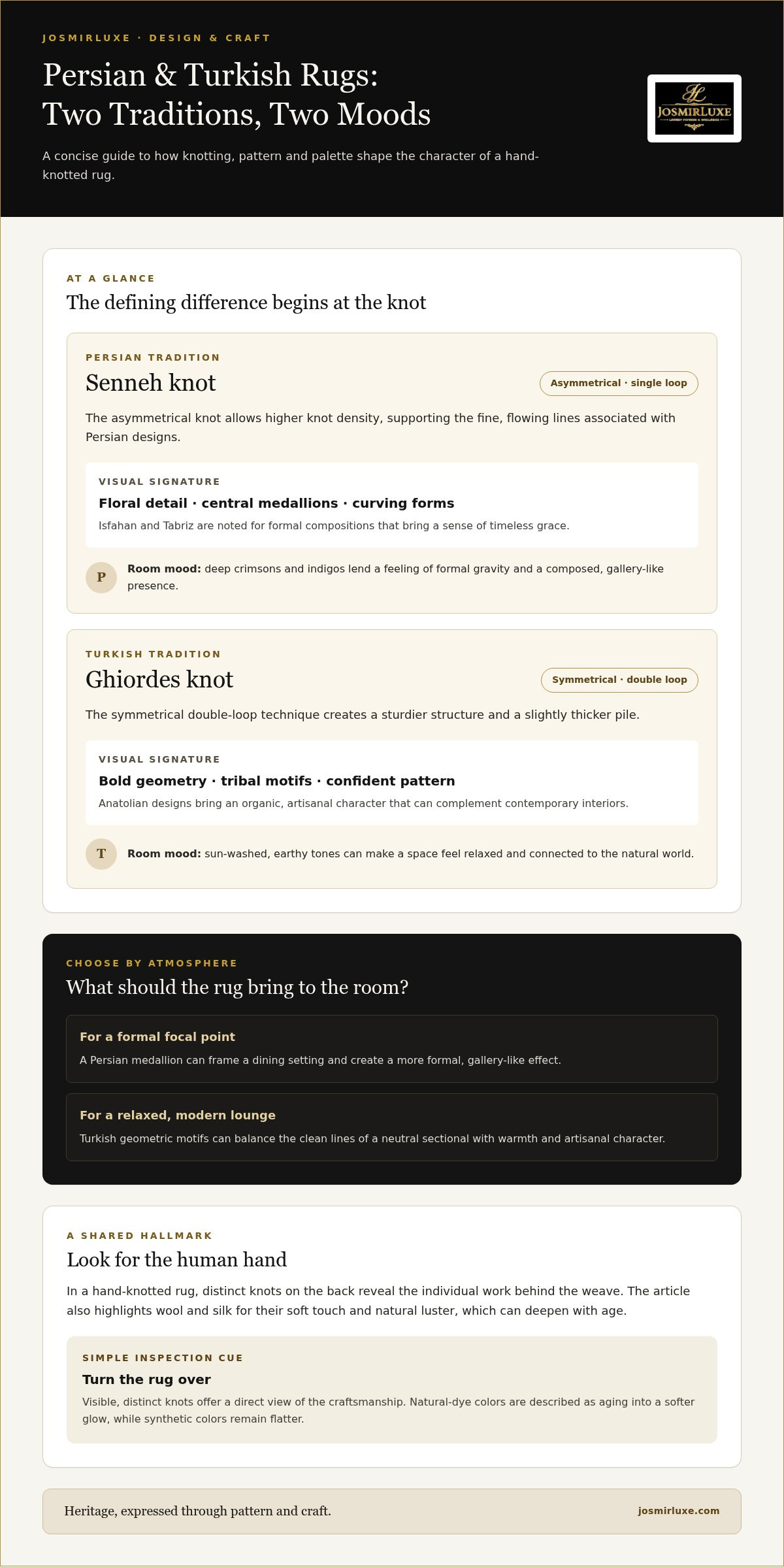
A machine can replicate a pattern, but it can't capture the spirit of a weaver's intent. Hand-knotted textiles carry a distinct energy that machine-made alternatives lack. When exploring the world of persian vs turkish rugs, the distinction begins with the knot itself. Persian artisans typically use the asymmetrical Senneh knot. This single-loop method allows for a higher knot density, enabling the intricate, flowing lines that define the style. This nuanced comparison reveals why these textiles remain the most coveted anchors for the modern home.
Turkish weavers favor the symmetrical Ghiordes knot. This double-looped technique provides superior structural strength and a slightly thicker pile. It’s the foundation of the rugged elegance found in Anatolian (Turkish) rugs. The choice of material further elevates the experience. At JosmirLuxe, we prioritize pieces crafted from high-quality wool and silk. These natural fibers ensure a soft touch and a natural luster that deepens with age, reflecting light in a way synthetic fibers never can.
The Persian Legacy: Curvilinear Elegance
Designs from regions like Isfahan or Tabriz are masterpieces of formality. They feature delicate floral patterns and central medallions that command attention. These rugs create a sense of sophisticated, timeless grace in any room. Every curve and vine tells a story of the artisan's personal heritage, making the piece a true conversation starter that feels both historic and fresh.
The Turkish Tradition: Geometric Strength
Turkish rugs offer a different allure through bold, tribal geometries and vibrant color palettes. Their designs often feel more organic and modern, making them ideal for contemporary luxury interiors. The double knot isn't just about durability; it represents a centuries-old testament to artisanal character. Deciding between persian vs turkish rugs often depends on whether you seek the soft, poetic flow of the former or the structured, confident presence of the latter. Both styles ground a room with an effortless beauty that complements an elevated lifestyle.
Designing with Heritage: How Origin Defines Your Interior Mood
A rug isn't merely a floor covering; it acts as an emotional foundation. When you weigh the choice of persian vs turkish rugs, you're choosing the energy of your sanctuary. Persian pieces often use deep crimsons and indigos to create a sense of timeless gravity. In contrast, Turkish textiles often feature sun-washed, earthy tones that feel lighter and more connected to the natural world. This choice determines whether your space feels like a formal retreat or a relaxed, organic haven.
This aesthetic distinction is rooted in the history of oriental rugs, where every palette was a response to the weaver's local landscape. Modern luxury living thrives on this heritage. Pairing a hand-knotted treasure with designer sectional sofas creates a "collected" look that feels intentional rather than staged. It’s the essential final layer that makes a physical space feel like a curated home.
Curating the Formal Space
In a dining room, symmetry is everything. Framing a luxury marble dining table with the intricate medallion of a Persian rug creates a gallery-like experience. High-knot-density pieces offer a clarity that commands respect. When light from modern pendant fixtures catches the silk highlights, the entire room takes on a luminous, ethereal quality that elevates every meal into an event.
Grounding the Modern Lounge
For a more relaxed atmosphere, the geometric boldness of a Turkish rug is unparalleled. In the ongoing dialogue of persian vs turkish rugs, the latter often wins for those seeking a modern, organic vibe. These pieces serve as a perfect counterpoint to the clean, minimal lines of a neutral sectional. The tactile invitation of a hand-knotted wool pile provides immediate warmth, while the "perfectly imperfect" nature of Turkish weaving adds a layer of artisanal character. You can explore the JosmirLuxe collection to find the atmospheric anchor that speaks to your aesthetic.
The Connoisseur’s Selection: Investing in Timeless Artistry
A hand-knotted rug is more than an interior detail; it's a multi-generational heirloom that matures alongside your home. While contemporary trends often fade, the inherent value of these textiles only deepens as they develop a sought-after patina. Understanding the key differences between Persian and Turkish rugs is the first step for any serious collector. This choice isn't just about aesthetics. It's about the emotional return on investment that comes from living with a masterpiece that improves your daily environment.
At JosmirLuxe, we view these textiles as functional art. Whether placed in a grand foyer or used as a wall-mounted tapestry, they carry a narrative of sustainable luxury. Choosing between persian vs turkish rugs allows you to decide which cultural legacy will anchor your sanctuary. These pieces represent the pinnacle of their respective traditions, offering a level of sophistication that mass-produced alternatives can't replicate. They aren't just purchases; they are anchors for a life well-lived.
Identifying Authentic Craftsmanship
Turn the rug over. The "back of the rug" test is the most honest way to evaluate an artisan's dedication. Every knot should be visible and distinct, reflecting the human hand behind the loom. Authentic luxury relies on natural dyes, which age gracefully into a unique, soft glow. Synthetic colors remain flat, but natural pigments interact with light and time to create a rich character. These subtle variations in color and pattern are the hallmarks of a piece that will hold its value for decades.
Starting Your Collection
Choosing your first anchor piece should be a reflection of the lifestyle you wish to enable. Professional curation is essential when exploring the global market, as it ensures the authenticity and investment grade of your selection. You can discover a meticulously curated collection of Persian rugs at JosmirLuxe, where each piece is chosen for its ability to transform a physical space into a gallery of history and comfort. Explore the collection to find the textile that speaks to your personal legacy.
The Final Layer of a Refined Home
Choosing the right textile is the most intimate decision in interior design. Whether you're drawn to the floral complexity of a Persian masterpiece or the bold, geometric energy of a Turkish weave, you're selecting a piece of history. The persian vs turkish rugs comparison ultimately comes down to the atmosphere you wish to cultivate. One offers a sense of timeless formality, while the other provides a modern, organic strength that grounds a contemporary lounge.
At JosmirLuxe, we believe your sanctuary deserves more than a mere floor covering. Our selection is curated by luxury lifestyle experts to ensure every piece is an authentic hand-knotted heritage item. These rugs don't just fill a space; they elevate it, becoming the atmospheric anchor that ties your designer furniture together. We invite you to Explore the JosmirLuxe Rug Collection and discover the piece that resonates with your aesthetic. Our team is also available for a complimentary design consultation to help you find the perfect match for your home. Your legacy begins with the foundation you choose today.
Frequently Asked Questions
Is a Persian rug more valuable than a Turkish rug?
Value is defined by provenance, material rarity, and the intricacy of the weave rather than origin alone. In the ongoing dialogue of persian vs turkish rugs, both traditions offer pieces that serve as significant financial and aesthetic investments. A high-knot-density Persian silk rug and a rare, antique Turkish tribal weave can both hold immense value, provided they represent the pinnacle of their respective craft.
How can I tell if a rug is truly hand-knotted and not machine-made?
The most reliable indicator of authenticity is the back of the rug. Machine-made versions feature a uniform, plastic-like backing or a perfect grid that lacks character. A truly hand-knotted piece reveals the individual knots and slight, artisanal irregularities on the underside. These variations aren't flaws; they're the fingerprint of the weaver and a guarantee of a unique, non-industrial creation.
Do Persian and Turkish rugs fit in a modern, minimal home?
Heritage textiles act as an essential soul for minimal spaces, providing a necessary layer of warmth and contrast. A bold Turkish geometric pattern grounds a neutral designer sectional, while a Persian medallion rug creates a sophisticated focal point in a stone-floored foyer. They bridge the gap between ancient artistry and modern luxury, ensuring a contemporary home feels curated rather than just furnished.
What is the best way to care for a hand-knotted wool rug to ensure it lasts for generations?
Preserving a hand-knotted wool rug requires minimal but consistent attention. You should vacuum regularly without using a beater bar and rotate the rug every year to prevent uneven wear from sunlight or foot traffic. Professional cleaning by a specialist every three to five years is vital to maintain the natural oils in the wool, ensuring the piece remains a vibrant heirloom for your family.