

A hand-knotted rug is far more than a decorative foundation; it's the silent soul of a room that bridges centuries of artistry with the precision of modern living. Many collectors find themselves lost in the intricate maze of persian rug patterns, fearing that a chosen piece might lack the depth of a true heritage work or clash with a minimalist aesthetic. It's natural to feel hesitant when the market is crowded with machine-made imitations that fail to capture the weight and texture of authentic craftsmanship.
At JosmirLuxe, we believe your home deserves the clarity of intentional design. This guide promises to unveil the evocative history and sophisticated symbolism behind these timeless motifs, helping you transform your space into a gallery of heritage art. We'll explore how specific regional designs can anchor your contemporary furniture, turning a simple room into an elevated lifestyle experience rooted in authenticity and quiet confidence.
Key Takeaways
- Decode the silent narrative of your home by understanding the spiritual symbolism behind classic medallion layouts and floral motifs.
- Discern the subtle differences between the high-precision artistry of city-woven masterpieces and the expressive, geometric stories of tribal designs.
- Confidently identify authentic persian rug patterns to ensure your selection represents a true investment in heritage craftsmanship.
- Learn how to use a hand-knotted rug as a grounding anchor that seamlessly integrates with modern sectional sofas and minimalist decor.
The Silent Narrative: Decoding Symbolic Persian Rug Patterns
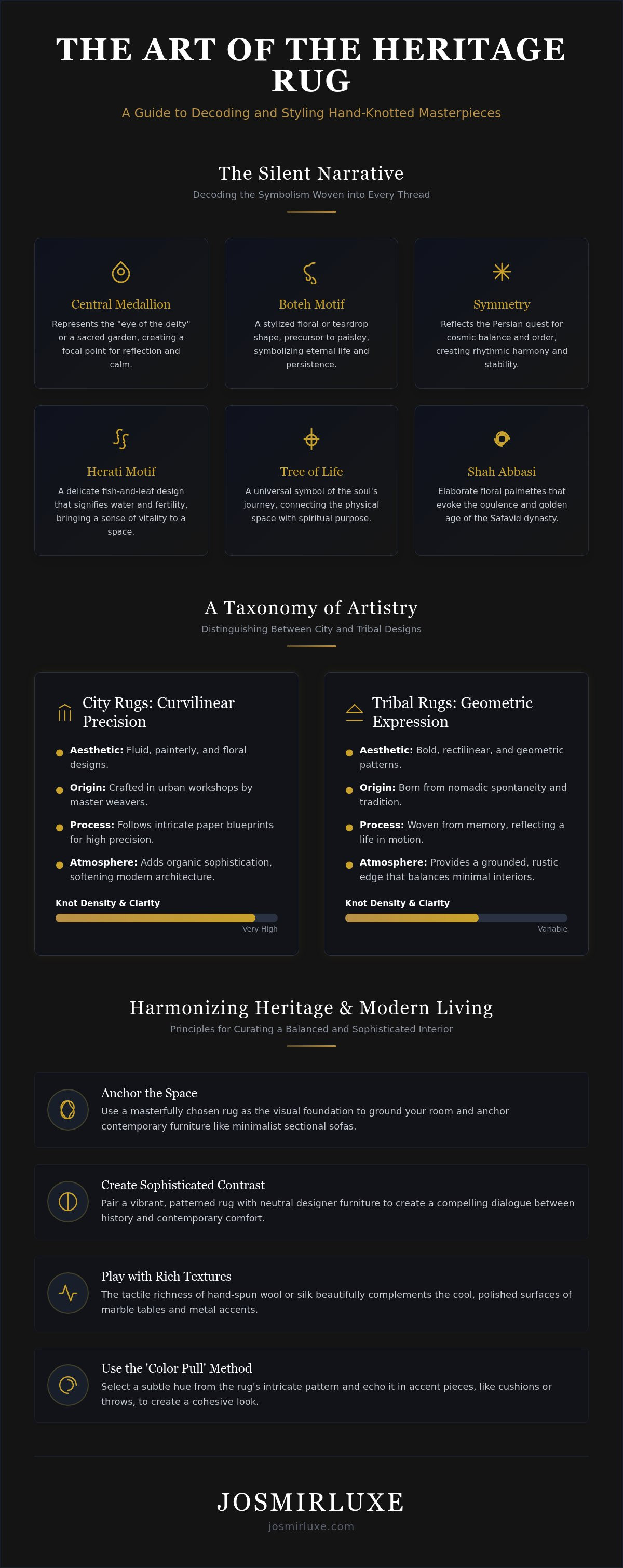
Every hand-knotted piece is much more than a floor covering; it's a woven canvas that captures the cultural identity and the history of Persian carpets. These intricate persian rug patterns represent a visual language that has survived centuries of transformation. When you look at a central Medallion layout, you're seeing a representation of the "eye of the deity" or a sacred garden pool. It acts as a focal point that draws the viewer inward, offering a moment of reflection amidst the noise of daily life.
Many collectors don't realize that symmetry within these designs isn't accidental. It reflects a profound Persian quest for cosmic balance and order, providing a rhythmic harmony that feels both stable and intentional. This geometric precision creates a sense of calm that grounds a room, showing why authentic persian rug patterns are the perfect companion for minimalist JosmirLuxe furniture. The Boteh motif, a familiar teardrop shape, serves as the ancient precursor to the modern paisley and symbolizes the beautiful persistence of eternal life.
Ancient Motifs and Their Hidden Meanings
Specific symbols add layers of narrative to each piece, allowing you to choose a rug that resonates with your personal story. These common motifs include:
- The Herati: A delicate fish-and-leaf motif that traditionally signifies water and fertility, bringing vitality to any lounge.
- The Shah Abbasi: Elaborate floral palmettes that evoke the opulence of the Safavid dynasty's golden age.
- The Tree of Life: A universal symbol representing the soul's path from earth to heaven, connecting your physical space with a higher purpose.
A Taxonomy of Artistry: Distinguishing City and Tribal Designs
The environment where a weaver works dictates the very DNA of the piece. In urban workshops, weavers follow intricate paper blueprints to create City rugs, known for their curvilinear designs and immense floral complexity. Masters in weaving centers like Tabriz and Isfahan produce works with high knot densities that allow for fluid, painterly details. Conversely, Tribal rugs are born from nomadic spontaneity. These pieces feature bold, rectilinear, geometric patterns that reflect a life lived in motion.
Understanding the symbolism in Southwest Persian rugs helps collectors appreciate why these non-repeating variations are so prized. Machine-made alternatives offer sterile perfection, but hand-knotted persian rug patterns possess intentional shifts in color and shape that signify human touch. This unique character ensures that each piece retains its status as an appreciating asset over time.
Curvilinear vs. Rectilinear: Choosing Your Aesthetic
The choice between city and tribal aesthetics depends on the atmosphere you wish to curate. Curvilinear city patterns are exceptional at softening the sharp lines and cold surfaces of modern architecture. They add a layer of organic sophistication to rooms featuring glass and steel. If your space feels too clinical, a tribal rug with its sharp, geometric persian rug patterns provides a grounded, rustic edge that balances a minimal interior. High knot density isn't just a technical spec; it's the key to pattern clarity and long-term investment value. You might explore the collection at JosmirLuxe to find the specific texture that resonates with your home's architecture.
The Curated Interior: Harmonizing Heritage Patterns with Modern Living
A masterfully chosen rug acts as the foundational anchor for high-end residential spaces, providing the visual weight necessary to ground a room. Strategic layering is the key to a modern aesthetic. You might pair a vibrant red Persian rug with neutral, designer sectional sofas to create a sophisticated dialogue between history and contemporary comfort. This contrast allows the heritage piece to shine while maintaining a clean, minimal atmosphere.
Textures play a critical role in this transformation. The tactile richness of hand-spun wool or luminous silk within a Persian rug complements the cool, polished surfaces of luxury marble dining tables. Scale is equally vital for a balanced environment. Ensure your chosen persian rug patterns have sufficient room to breathe beneath modern pendant lighting. The design should feel intentional, allowing the artistry to unfold across the floor without overwhelming the room's architecture.
Creating Harmony Between Heritage and Contemporary Design
Achieving a balanced look often involves the "color pull" method. Select one subtle hue from the complex persian rug patterns and use it for your sofa upholstery or accent pieces. This creates a thread of continuity that ties the room together. In a minimal-maximal balance, let the rug be the hero piece. JosmirLuxe curates a selection that bridges the gap between ancient art and modern comfort, ensuring your home reflects an elevated, curated lifestyle.
Elevating Your Space with Heritage Artistry
Investing in a hand-knotted rug is a commitment to a lifestyle defined by authenticity and quiet elegance. We've explored how persian rug patterns serve as a silent narrative; bridging the gap between ancient symbolism and the clean lines of modern architecture. Whether you're drawn to city workshops or tribal weaves, these pieces offer an emotional transformation that machine-made imitations can't replicate. Design is a language.
At JosmirLuxe, our experts curate a selection that prioritizes investment-grade craftsmanship and seamless integration with your designer furniture. It's about finding the anchor that brings soul to your interior. We invite you to explore the JosmirLuxe collection of authentic hand-knotted rugs and discover the piece that speaks to your unique aesthetic. Your journey toward a more curated home begins with a single thread of history.
Frequently Asked Questions
What do the most common Persian rug patterns symbolize?
Most persian rug patterns function as a visual language where every motif carries a specific spiritual or historical meaning. The central medallion often symbolizes the eye of a deity or a sacred garden pool. Floral palmettes, known as Shah Abbasi, represent the opulence of historical dynasties. The teardrop-shaped Boteh motif is a precursor to paisley, signifying eternal life and the soul.
How can I tell if a Persian rug pattern is authentic or machine-made?
Authenticity is found in the subtle imperfections that machine production can't replicate. Turn the rug over; the pattern should be clearly visible on the back, reflecting the hand-knotted construction. Machine-made versions often have a plastic-like mesh or a perfectly uniform appearance. Authentic pieces also exhibit abrash; these are natural color variations that give the design depth and confirm its artisanal origin.
Are geometric or floral Persian rug patterns better for a modern home?
Both styles offer distinct benefits for a contemporary interior depending on your architectural goals. Geometric persian rug patterns provide a grounded, rustic edge that complements minimalist spaces with sharp angles. Conversely, curvilinear floral designs from city workshops soften the cold surfaces of modern glass and steel. Choosing between them allows you to curate a specific atmosphere, whether you seek structural harmony or organic warmth.
Do certain Persian rug patterns increase the rug’s investment value?
Complexity and rarity are the primary drivers of investment value in hand-knotted rugs. Intricate city patterns from renowned weaving centers like Isfahan or Tabriz often command higher prices due to their extreme knot density and artistic precision. Because these designs aren't repeating and are labor-intensive, they function as appreciating assets. A well-preserved piece from JosmirLuxe represents a tangible investment in art that transcends trends.