

What if the piece that makes your living room feel crowded could also become its most inviting focal point? A sectional naturally draws the eye, and learning how to style a sectional sofa begins with working with its presence, not trying to disguise it. An undersized rug, a coffee table that feels disconnected, or cushions without a clear purpose can make the whole room feel less settled.
A few considered choices can balance the sectional’s scale while keeping the room comfortable and easy to move through. Start with the layout, then connect the sofa to the rug and table before adding color, texture, lighting, and personal details. The result can feel warm and welcoming without looking overfilled, an approach that reflects JosmirLuxe’s focus on elevated home furnishings.
Key Takeaways
- Learn how to style a sectional sofa by making it the room’s visual anchor while preserving comfortable pathways and breathing room.
- Build a cohesive seating area in a simple sequence: ground it with a rug, add a table, then introduce layered textures and accents.
- Use contrast alongside a few repeated tones to create harmony without relying on a perfectly matched set.
- Bring warmth and personality to the arrangement with considered lighting, artwork, and a small selection of personal objects.
How to Style a Sectional Sofa as the Living Room’s Focal Point
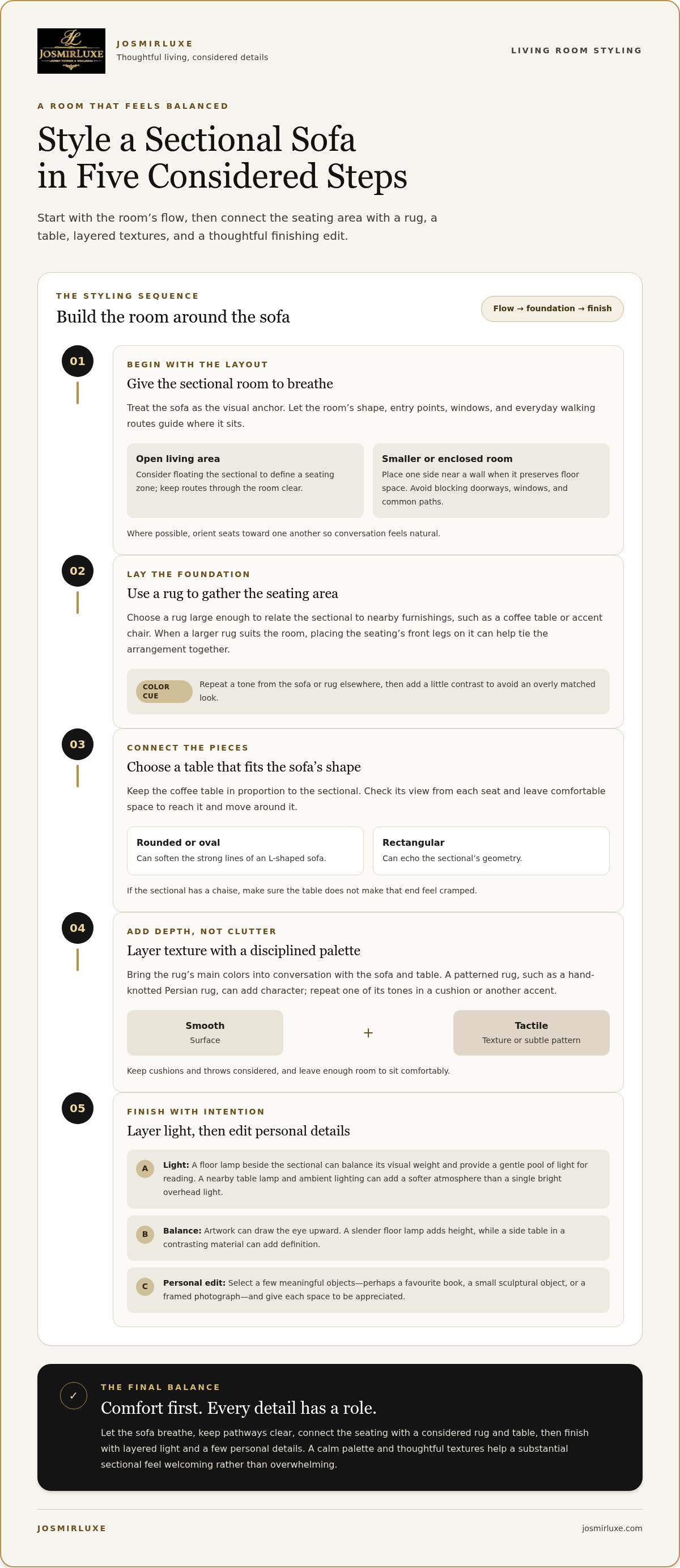
Begin by treating the sectional as the room’s visual anchor. Its shape naturally creates a place to gather, so arrange nearby furnishings to support it rather than compete with it. Before moving pieces, consider the room’s entry points, windows, and everyday walking routes. The best layout feels open as you move through it and inviting when you sit down.
Proportion gives a large sofa presence without letting it overwhelm the room. Look at the sectional from the doorway as well as from the seating area. If it dominates the view, try changing its position or clearing visual clutter nearby. Leave enough open space for people to pass comfortably and for the sofa’s shape to read clearly.
How should a sectional sofa sit within the room?
Let the room’s shape and natural pathways guide placement. In an open living area, floating the sectional away from the walls can create a distinct seating zone and define the transition to another part of the room. Position its back toward the adjoining space when that suits the layout, while keeping routes through the room clear.
In a smaller or more enclosed room, placing one side near a wall can preserve floor space. Avoid blocking doorways, windows, or the routes people use most. Orient the seats toward one another where possible, so conversation feels natural rather than directed toward the room’s edges.
A rug can bring the seating area together. Choose one large enough to relate the sectional to nearby furnishings, such as a coffee table or accent chair. When a larger rug suits the room, placing the front legs of the seating on it can help tie the arrangement together. Repeat a tone from the sofa or rug elsewhere, then introduce a little contrast to keep the room from feeling overly matched. This is a considered first step in how to style a sectional sofa: establish the room’s flow, then let each piece find its place within it.
How to Layer Rugs, Tables, and Textures Around a Sectional Sofa
Build the seating area in a deliberate order: begin with a rug, add a coffee table, then introduce textiles and smaller accents. This gives each layer a clear role and helps the sectional feel connected to the room. Check the balance from different angles, and leave comfortable space to reach the table and move around it.
What should you place in front of a sectional sofa?
Choose a coffee table that feels in proportion to the sectional’s footprint. A rounded or oval shape can soften the strong lines of an L-shaped sofa, while a rectangular table can echo its geometry. Consider how the table looks from each seat and whether its shape leaves a clear route through the space. If the sectional has a chaise, make sure the table does not make that end feel cramped.
Let the rug define the seating zone and bring its main colors into conversation with the sofa and table. A hand-knotted Persian rug can introduce pattern and character; repeating one of its tones in a cushion or another accent helps the arrangement feel cohesive without making every piece match.
Finish with a restrained mix of cushions and throws. Pair a smooth surface with a more tactile one, or add a subtle pattern beside a solid tone. Keep the palette considered and leave enough room to sit comfortably, so the sectional remains the focus. Varied textures bring depth to a room; a disciplined palette keeps that depth from becoming clutter. This thoughtful layering is central to how to style a sectional sofa with both comfort and visual clarity. Explore JosmirLuxe’s designer sectional sofas for inspiration as you shape a living space around gathering and ease.
How to Finish a Sectional Sofa Arrangement with Lighting and Personal Details
Once the larger pieces feel settled, lighting and personal details bring the seating area to life. A floor lamp beside the sectional can balance its visual weight and provide a gentle pool of light for reading. A table lamp can add a more intimate glow nearby, while ambient lighting helps the room feel calm after daylight fades. Layer these sources so the room has a softer atmosphere than a single bright overhead light can provide.
How can you make a sectional seating area feel complete?
Consider what the sofa needs around it. If the sectional has a substantial silhouette, artwork above or beside it can draw the eye upward. A slender floor lamp adds height without taking up much visual space, while a side table in a contrasting material can add definition without competing for attention. Choose one or two accents that balance the sofa rather than filling every available spot.
Personal objects make the arrangement feel lived in. Select a few pieces with meaning, perhaps a favourite book, a small sculptural object, or a framed photograph. Give each room to be appreciated instead of filling every surface. A considered edit lets personal details add warmth while preserving the calm and focus of the room.
As you decide how to style a sectional sofa, let comfort guide the final choices: the light should invite you to linger, and the objects should feel naturally at home. For further inspiration, Explore the JosmirLuxe home collection.
Make Your Living Room Feel Naturally Complete
A balanced sectional arrangement begins with intention: give the sofa room to breathe, connect it to nearby furnishings with a thoughtful rug and table, then finish with layered light and personal details. These choices help a substantial piece feel welcoming rather than overwhelming, while keeping the room comfortable for everyday life.
Learning how to style a sectional sofa isn’t about filling every corner. It’s about creating a setting where proportion, texture, and atmosphere work together, and where each detail has space to be appreciated. JosmirLuxe offers designer sectional sofas within a curated collection of home furnishings, bringing comfort and considered design into the heart of the home.
Let your living room reflect the way you want to gather, unwind, and feel at home. Explore the JosmirLuxe home collection for inspiration.
Frequently Asked Questions
How do you make a sectional sofa look more stylish?
Give the sectional a clear visual role, then build a considered setting around it. To understand how to style a sectional sofa, start with a rug that relates to the sofa and nearby furnishings. Choose a coffee table with a shape and visual weight that feels balanced, then add a few cushions, a throw, layered lighting, and personal details. Keep pathways clear and leave enough open space for the room to feel calm.
Should a rug go under a sectional sofa?
A rug can help define the seating area and visually connect the sectional to its surroundings. Position it so the sofa and nearby furniture feel like part of one composition rather than isolated pieces. If the rug is large enough, placing the front legs of the seating on it can create a stronger connection. Repeat a color from the rug in a cushion, throw, or accent, and use a thoughtful contrast in texture or pattern to avoid a too-matched look.
How do you arrange a living room with a sectional?
Place the sectional according to the room’s shape and the routes people naturally use. In an open-plan space, floating it can create a distinct seating zone; in a more compact room, positioning one side near a wall may preserve floor space. Orient the seats to support conversation, and keep doorways and everyday pathways clear. Arrange nearby furniture so it feels connected without making movement awkward.
How many pillows should you put on a sectional sofa?
There’s no fixed number. Choose enough to add comfort and texture without crowding the seats. Start with a restrained arrangement, perhaps a few cushions grouped at the corners, and see how the sectional feels in daily use. Vary texture or pattern while repeating tones from the rug or room. If pillows make it harder to sit comfortably, edit the arrangement back.