

What if the piece you believe to be a centuries-old heirloom is actually the product of a high-speed industrial loom? It's a valid concern for anyone seeking to elevate their home with the soul of authentic craftsmanship. While many are overwhelmed by the vast online marketplace, learning how to identify a real hand-knotted rug is the first step toward building a collection that reflects true heritage. You likely value the story behind an object just as much as its aesthetic appeal, yet the confusion between hand-tufted and hand-knotted techniques can make the selection process feel unnecessarily daunting.
This guide will give you the mastery needed to distinguish genuine artistry from mass-produced imitations with the quiet confidence of a true connoisseur. We'll provide the clarity you need to invest in pieces that offer lasting value and a sense of history for your JosmirLuxe lifestyle. We'll explore the subtle signatures of the weaver's hand, including the structural integrity of the fringe and the unique, intentional color variations known as abrash. By the end of this journey, you'll have the expert eye required to curate a beautifully inspired space filled with true heritage art.
Key Takeaways
- Recognize the profound difference between industrial production and the individual spirit captured within a weaver's intentional artistry.
- Master the technical visual cues of authenticity, including the "map of the rug" found in irregular knot patterns, to learn how to identify a real hand-knotted rug.
- Develop a tactile appreciation for authentic foundations by feeling for the specific suppleness and flexibility characteristic of true hand-knotted craftsmanship.
- Explore how an authentic Persian rug serves as a sophisticated emotional anchor when integrated with modern design elements like marble and designer furniture.
- Secure your investment at JosmirLuxe by understanding the enduring value of heritage art that improves your everyday living and elevates your physical space.
The Artistry Behind the Weave: Why Authenticity Matters
Choosing a rug for a JosmirLuxe home is more than selecting a floor covering. It's about inviting a piece of living history into your private sanctuary. While a machine-made product offers sterile, cold perfection, a hand-knotted piece offers a narrative. This distinction is vital when learning how to identify a real hand-knotted rug. Every knot represents a moment in time, a deliberate choice by an artisan whose hands have guided the wool through the foundation. This human touch creates a depth that no machine can replicate.
The history of hand-knotted rugs reveals a tradition where slight variations are celebrated as signatures of authenticity. These aren't defects; they're the "soul" of the piece. Unlike industrial items designed for rapid obsolescence, these rugs are sustainable, multi-generational investments. They age with grace, becoming softer and more vibrant over decades. In a modern interior, they serve as an emotional anchor, bridging the gap between contemporary design and ancient heritage.
The Human Element vs. Industrial Precision
Industrial looms produce thousands of square feet daily, prioritizing speed and rigid uniformity. These pieces lack the structural character and resilience of hand-tied knots. The meditative process of hand-knotting can take months or even years for a single masterpiece. Each fiber is integral to the rug's foundation, creating a supple, breathable work of art. At JosmirLuxe, we believe this human touch is what transforms a house into a curated home. Understanding how to identify a real hand-knotted rug allows you to see past the surface and appreciate the months of quiet dedication woven into every inch of the pile.
Authenticity is found in these intentional variations. A weaver might change the wool batch slightly, creating a beautiful shift in tone known as abrash. These details tell the story of the rug’s creation, ensuring that no two pieces are ever identical. When you choose a hand-knotted piece, you aren't just buying a product; you're preserving a legacy of craftsmanship that has survived for millennia.
The Signature of the Weaver: 4 Key Indicators of a Hand-Knotted Rug
The Back of the Rug: A Story Told in Knots
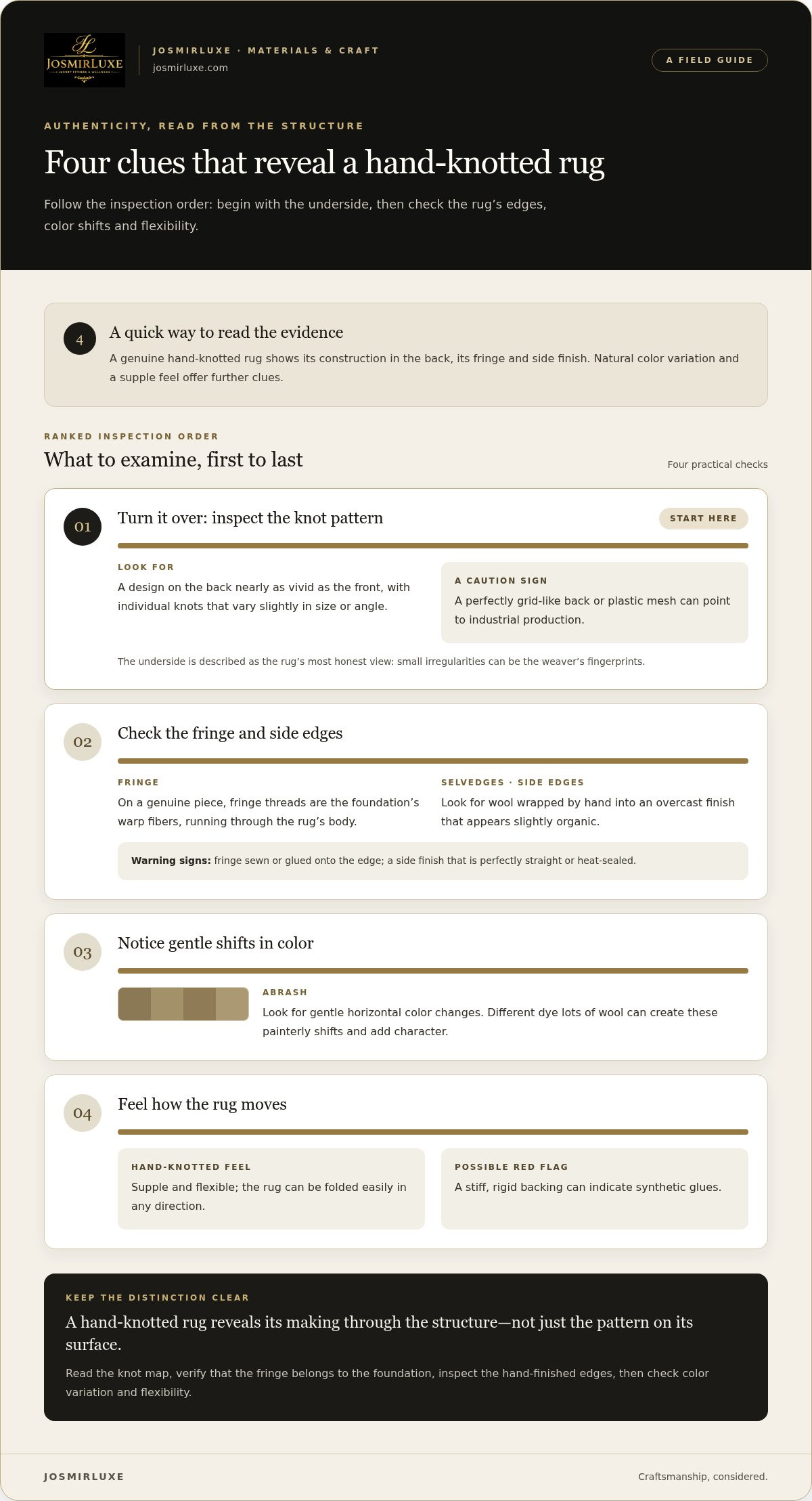
The most honest part of any rug is its underside. Flip the corner over to inspect what experts call the "map" of the piece. In a genuine hand-knotted rug, the design on the back is nearly as vivid as the front. You'll see individual knots that aren't perfectly uniform. Some may be slightly larger; others might sit at a subtle angle. These tiny irregularities are the fingerprints of the artisan. If the back looks perfectly grid-like or is covered by a plastic mesh, it's a sign of industrial production rather than heritage craft.
Fringes and Selvedges: The Foundation of Authenticity
Examine the ends of the rug with a discerning eye. In a genuine piece, the fringe isn't a decoration. It's the foundation itself. These threads are the actual warp fibers that run through the entire body of the rug. If the fringe appears sewn or glued onto the edge, the piece is an imitation. Similarly, look at the selvedges, or the side edges. A weaver finishes these by hand, wrapping them in wool to create an "overcast" edge. This border should look slightly organic and hand-finished, never perfectly straight or heat-sealed.
Beyond the structure, look for "abrash." These are the gentle, horizontal shifts in color that occur when different dye lots of wool are used. It creates a painterly depth that adds character to a room. You should also feel for flexibility. A real hand-knotted rug is incredibly supple and can be folded easily in any direction. Stiff, rigid backings often indicate the presence of synthetic glues. Explore the collection to find a piece that resonates with your personal style and brings a sense of history to your home.
Curating Your Legacy: Integrating Hand-Knotted Art into Modern Interiors
A hand-knotted rug serves as the emotional foundation of a sophisticated home. It’s more than a design choice; it’s a commitment to a lifestyle that values substance over speed. While you now understand the technical aspects of how to identify a real hand-knotted rug, the ultimate goal is to see these pieces as anchors for your most cherished spaces. They ground the airy openness of contemporary architecture, providing a rich, tactile counterpoint to modern glass and steel.
Integrating these masterpieces into your home allows for a beautiful dialogue between eras. Imagine the intricate patterns of a Persian weave set beneath the clean, cool surface of one of our luxury marble dining tables. This contrast highlights the best of both worlds, creating an atmosphere that’s both timeless and distinctly current. Caring for such an investment is simple, requiring only gentle vacuuming and the occasional rotation to ensure the natural fibers age with grace. As you transition from a shopper to a collector, you'll find that these pieces become part of your family’s narrative.
The Interplay of Texture and Light
The way a hand-knotted rug interacts with atmosphere is truly unique. Natural wool and silk fibers possess a subtle luster that responds to the soft glow of modern pendant lighting. As light changes throughout the day, the rug’s colors deepen and shift, revealing new layers of the weaver's intent. It isn't just a rug; it’s a floor painting that breathes with the room, elevating the entire aesthetic of your living space through organic texture and depth.
Selecting Your Next Masterpiece at JosmirLuxe
Transitioning from a casual buyer to a discerning collector requires a partner you can trust. At JosmirLuxe, our curation process ensures that every piece in our collection meets the highest standards of heritage art. Knowing how to identify a real hand-knotted rug empowers you to build a legacy within your home with absolute confidence. We invite you to explore the collection and find the emotional anchor that will define your space for years to come.
Embracing the Art of Authentic Living
Authenticity is a quiet authority that transforms a house into a curated home. By mastering the structural nuances of the fringe and the organic irregularities of the weave, you've moved beyond the surface level of interior design. You've learned how to identify a real hand-knotted rug, ensuring that every piece you bring into your sanctuary carries a genuine narrative of heritage and skill. These masterpieces don't just decorate a room; they anchor it with a sense of history that mass-produced items can never emulate.
At JosmirLuxe, we believe in the power of sustainable luxury and timeless design. Our collection is meticulously curated for discerning collectors who seek uncompromising quality and true artistic depth. Whether you're pairing a vibrant Persian weave with modern marble or creating a soft retreat with designer furniture, your choice reflects a commitment to excellence. Discover the collection of authentic hand-knotted Persian rugs at JosmirLuxe to find a piece that resonates with your personal legacy. Trust in your refined eye as you continue to build a space that is as unique as the hands that crafted its foundation.
Frequently Asked Questions
What is the most obvious sign that a rug is machine-made?
A perfectly uniform, rigid backing is the most immediate indicator of a machine-made rug. These pieces often feature a plastic or latex mesh that hides the structural weave from view. Unlike the organic texture found when you learn how to identify a real hand-knotted rug, industrial looms create a sterile, grid-like pattern that lacks the soul of artisanal work.
Can a hand-knotted rug have imperfections and still be high quality?
Subtle irregularities in the knotting and color are actually evidence of superior craftsmanship rather than defects. These variations, such as the horizontal tonal shifts known as abrash, reflect the hand-dyeing process and the individual weaver's touch. In the world of JosmirLuxe heritage art, these nuances increase the piece’s value and distinguish it from mass-produced imitations.
Is there a difference between "hand-tufted" and "hand-knotted" rugs?
Hand-knotted rugs are tied by hand to the foundation, while hand-tufted rugs are created by punching yarn into a canvas using a tufting gun. The tufting process requires synthetic glues and a heavy backing material to hold the fibers in place. Understanding this distinction is essential for how to identify a real hand-knotted rug, as only the knotted technique offers the structural integrity required for a true heirloom.
How long should I expect an authentic hand-knotted rug to last in my home?
An authentic hand-knotted rug is a legacy investment that can easily last for a century or more. Because each knot is independently tied to the warp and weft, the structural integrity remains intact even under heavy use. These pieces are designed to be passed down through generations, becoming softer and more beautiful as they age within your home.