

Before reaching for soap, pause to check the care label. Dirt and stains can make a carefully arranged seating area feel neglected, but the wrong cleaning method may harm the fabric. Successful cleaning outdoor furniture cushions starts with the label, not a one-size-fits-all solution.
With a little guidance, you can refresh cushions without aggressive scrubbing or guesswork. This guide explains how to check the label, remove routine dirt, treat localized stains carefully, and decide what to do if a mark remains. The result is a more inviting outdoor space, cared for with the same thoughtfulness that went into creating it.
Key Takeaways
- Let the care label and cushion construction guide your approach; check whether covers are removable and look for cleaning-code instructions.
- For cleaning outdoor furniture cushions, first remove loose debris, then use only a solution approved for the fabric.
- Clean gently in manageable areas, and avoid soaking cushions unless the care instructions allow it.
- Follow the label’s drying guidance, then reassess any remaining discoloration before considering further treatment.
Before cleaning outdoor furniture cushions, check the fabric and care label
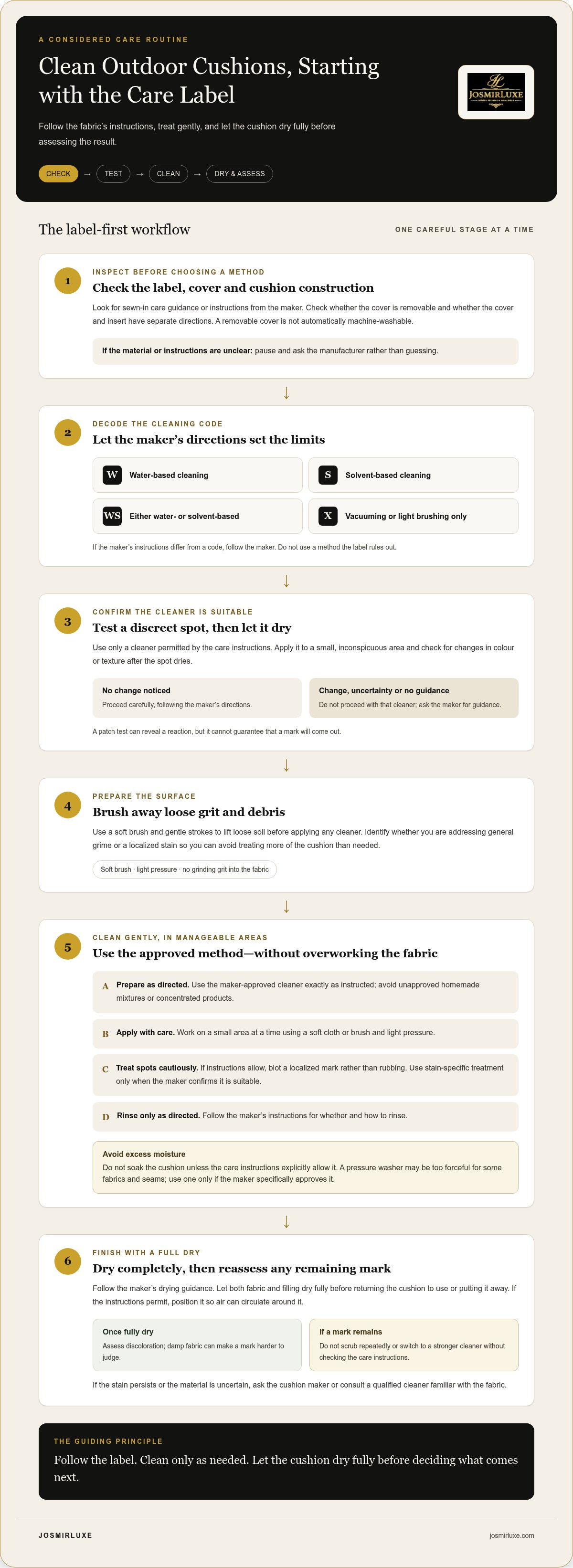
Start with the label and cushion construction, not a preferred cleaner. Before cleaning outdoor furniture cushions, check the cushion itself, its removable cover, and any instructions from the maker. A cover that unzips may still have washing restrictions, so don’t assume it can go in a machine.
Look for a sewn-in label or care information supplied with the furniture. Some labels use cleaning codes: W indicates water-based cleaning, S calls for solvent-based cleaning, WS allows either, and X limits care to vacuuming or light brushing. Follow the maker’s directions if they differ, and don’t use a method the label rules out. Construction matters too, so the fabric’s surface alone may not show how the cushion will respond to moisture.
What should you check before cleaning patio cushions?
First, identify what you’re dealing with: loose outdoor debris, general grime, or a localized stain. This helps you choose a measured approach rather than treating the whole cushion unnecessarily. Check whether the cover is removable and whether the maker gives separate instructions for the cover and insert. If the fabric or cleaning guidance is unknown, pause and ask the manufacturer instead of guessing.
Once you’ve identified a cleaner permitted by the care instructions, test it on a small, discreet area. Let the spot dry, then check for changes in colour or texture before proceeding. A test can reveal a reaction, but it can’t guarantee that every mark will come out. If you can’t confirm that a cleaner suits the fabric, don’t use it. Preserving the cushion matters more than pursuing a stain at any cost.
How to clean outdoor furniture cushions with a gentle, practical routine
Once the care instructions confirm a suitable method, keep the process controlled. Brush away loose debris with a soft brush so grit doesn’t get rubbed into the fabric. Choose a cleaner the maker approves and prepare it exactly as directed. Avoid relying on a homemade mixture or concentrated product simply because it worked on another fabric.
- Remove loose soil: Brush gently to lift grit and debris without grinding it into the fabric.
- Apply with care: Use a soft cloth or brush on a small, manageable area at a time.
- Follow the label: Spot-clean or treat a broader surface only as instructed, and rinse only if and how the maker directs.
Which cleaning steps help lift dirt without harsh treatment?
Start with a discreet patch test using the approved cleaner, then check for changes before continuing. Use light pressure and let the cloth or brush do the work. If the instructions allow, blot a localized mark rather than rubbing it, which can stress the surface or spread the stain. Use a stain-specific treatment only when the cushion maker confirms it’s suitable for the fabric.
Work across one section at a time instead of saturating the cushion. Excess moisture can reach the filling, so don’t soak it unless the care instructions explicitly permit that method. A pressure washer can be too forceful for some fabrics and seams; use one only if the maker specifically approves it.
For an inviting outdoor setting, explore JOSMIRLUXE’s outdoor lounge sets.
After cleaning outdoor cushions: dry them fully and assess the results
Cleaning isn’t complete until the cushion is dry. Follow the maker’s drying instructions, and let both the fabric and filling dry fully before returning the cushion to use or storing it. Trapped moisture can encourage mildew, so don’t rush this step. If the care guidance permits, position the cushion so air can circulate around it.
How can you tell whether cushions need another clean or different care?
Wait until the cushion has dried as directed before judging the result. Discoloration can be harder to assess while fabric is damp. If a mark remains, resist the urge to scrub again or reach for a stronger cleaner. Repeated treatment may affect the fabric, colour, or finish, so check the care instructions before considering another cleaning method.
If the stain persists or you can’t identify the material, ask the cushion maker for guidance or consult a qualified cleaner familiar with the fabric. That’s a more considered next step than applying an unapproved treatment. For future care, follow the maker’s advice on routine cleaning and storage, and make sure cushions are dry before putting them away.
A fresh, well-kept seating area helps outdoor spaces feel ready for unhurried afternoons and easy gatherings. When cleaning outdoor furniture cushions, patience and the maker’s instructions are better guides than repeated treatment. JOSMIRLUXE’s outdoor living selection offers inspiration as you shape an inviting setting.
Keep your outdoor space inviting with thoughtful cushion care
Careful cleaning outdoor furniture cushions starts with the maker’s label, since fabric and construction determine which methods are suitable. Remove loose dirt, use only an approved cleaner, and work gently without soaking the cushion unless its instructions allow it. Then follow the recommended drying guidance and let the cushion dry fully before judging any remaining marks.
If discoloration persists, avoid stronger or repeated treatment until you’ve checked the care instructions or consulted the cushion maker. A measured approach can help preserve the comfort and atmosphere of an outdoor seating area without relying on guesswork.
JOSMIRLUXE offers upscale outdoor lounge sets for considered outdoor living. Explore JOSMIRLUXE’s outdoor living selection for inspiration as you create a welcoming, composed space.
Frequently Asked Questions
Can you put outdoor furniture cushion covers in the washing machine?
Only if the cushion maker’s care label or instructions explicitly allow machine washing. Removable covers aren’t automatically machine-safe, so check the permitted wash method, temperature, and detergent, and confirm whether the insert must be removed. If guidance is missing or unclear, don’t guess. For cleaning outdoor furniture cushions, a fabric-approved spot-cleaning method may be a more cautious option than an unverified machine wash.
What is the best way to clean outdoor cushions with mildew?
Use only a mildew-cleaning method approved for the cushion’s fabric by its care instructions or manufacturer. Avoid applying bleach, vinegar, or another strong treatment unless the maker specifically permits it, and don’t combine cleaning products. If mildew remains after an approved treatment, stop rather than escalating to a harsher method. Ask the cushion maker or a qualified cleaner familiar with the material for advice.
How do you dry outdoor cushions after cleaning?
Follow the cushion maker’s drying instructions and let the cushion dry completely before returning it to use or storing it. If the guidance allows, place it where air can circulate around it, or stand it on its side to help it drain. Check that the filling is dry too; a surface that feels dry may not mean the cushion is ready to put away.