

What if the greatest threat to your Persian rug isn't the passage of time, but the very methods used to maintain it? You likely view your hand-knotted rug as more than just a home accessory; it's a silent narrator of culture and a significant investment in your living space's atmosphere. It's completely natural to feel a sense of hesitation when considering how to clean a Persian rug at home, especially with the fear of color bleeding or fiber degradation looming over every decision.
At JosmirLuxe, we believe that caring for luxury textiles should be a ritual of preservation rather than a source of stress. This guide provides the clarity you've been seeking, offering a sophisticated approach to maintenance that honors the craftsmanship of your heirloom. You'll discover how to navigate the nuances of pH-neutral solutions and the importance of WoolSafe certifications. We'll walk through the delicate process of refreshing your rug's vibrancy while ensuring its structural integrity remains flawless, allowing you to maintain an elevated home environment with absolute confidence.
Key Takeaways
- Shift your perspective from routine maintenance to a preservation ritual that honors the intricate artistry of hand-knotted wool.
- Discover the exact methodology for how to clean a Persian rug at home using pH-balanced solutions that safeguard delicate natural dyes.
- Master the refined mist technique to refresh your rug’s surface without risking the structural integrity of its foundation.
- Learn how strategic placement and thoughtful rotation protect your investment from the subtle effects of sunlight and high-traffic patterns.
- Build the confidence to curate an elevated living space where your most cherished textiles retain their vibrancy for generations.
The Philosophy of Persian Rug Preservation
A hand-knotted Persian rug is a living testament to centuries of tradition. It's an essential component of an elevated lifestyle, serving as both a foundation for your home's aesthetic and a piece of storied art. Understanding the history and artistry of Persian rugs is the first step toward true preservation. While many search for how to clean a Persian rug at home, the process is less about removal and more about protection. True care is a ritual that honors the craftsmanship of the weaver, ensuring the piece remains a centerpiece of your home for decades.
The soul of a rug lies in its high-quality wool, which naturally contains lanolin. This essential oil provides the characteristic luster and resilience found in authentic pieces. Harsh chemicals strip this protection away, leaving fibers brittle, dull, and vulnerable to damage. Preservation is a mindful practice that maintains these natural oils, ensuring your investment remains vibrant and supple. By shifting your focus from "cleaning" to "preserving," you treat your rug as the heritage asset it truly is.
Identifying Your Rug’s Natural Heritage
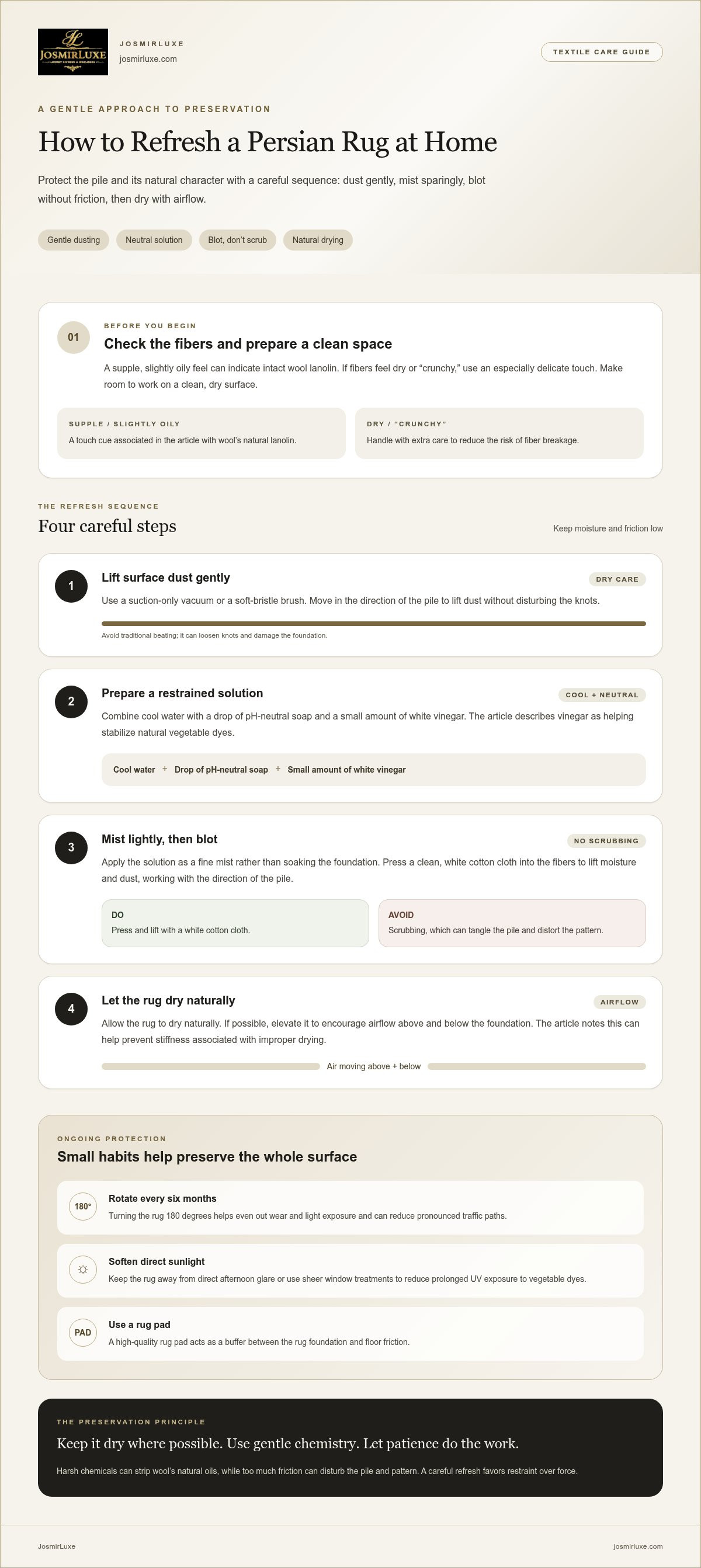
Before any maintenance begins, you must understand the materials you're handling. Authentic JosmirLuxe pieces often feature vegetable dyes, which age with a sophisticated patina unlike their synthetic counterparts. Perform a "touch test" by running your palm across the pile. High-grade wool should feel supple and slightly oily, a sign that the lanolin is intact. If the fibers feel dry or "crunchy," they require an even more delicate touch to avoid breakage during the preservation process.
The Pre-Cleaning Ritual: Gentle Dusting
Preparation is the key to maintaining a luxury atmosphere. Traditional "beating" is far too aggressive for delicate hand-knotted structures; it can loosen knots and damage the foundation. Instead, modern preservation relies on mindful dusting. This calm, intentional approach ensures that when you learn how to clean a Persian rug at home, you aren't just performing a chore, but participating in a legacy of care.
- Prepare a clean, dry space with ample room to move the textile.
- Use a suction-only vacuum or a soft-bristle brush to avoid fiber abrasion.
- Work in the direction of the pile to lift surface dust without disturbing the intricate knots.
A Refined Guide to At-Home Refreshing
Refreshing your space starts with the textiles that ground it. When considering how to clean a Persian rug at home, the goal isn't to saturate, but to gently lift surface impurities. This process requires a curated approach, moving away from generic household cleaners toward a more intentional methodology that respects the age and origin of your piece.
The PH-Balanced Solution: A Gentle Chemistry
Wool and silk are organic materials that respond best to a neutral environment. A sophisticated solution involves cool water and a drop of pH-neutral soap, balanced with a small amount of white vinegar. Vinegar acts as a stabilizer for natural vegetable dyes, ensuring the rich crimsons and deep indigos don't migrate. This aligns with expert guidance on textile conservation, which prioritizes the long-term stability of the fibers over aggressive, short-term results. It's a chemistry of restraint that protects the rug's delicate heritage.
Mastering the Motion: Blotting vs. Scrubbing
Scrubbing is the enemy of the hand-knotted weave. It tangles the pile and can distort the delicate geometry of the pattern. Instead, adopt a rhythmic blotting technique. Apply your solution using a fine mist to avoid soaking the foundation. Use a clean, white cotton cloth to press firmly into the fibers, lifting moisture and dust without friction. Always work in the direction of the pile. This simple detail preserves the rug's natural sheen and ensures the texture remains uniform across the entire surface.
Once the refresh is complete, allow the rug to dry naturally. Elevate the piece if possible to encourage airflow above and below the foundation. This prevents the stiffness often associated with improper drying and restores the wool's original, supple feel. It's a slow process, but the result is a textile that feels as vibrant as the day it was woven. If you're looking to add another masterpiece to your home, explore the collection of curated hand-knotted pieces that define the JosmirLuxe aesthetic.
Protecting Your Investment for Generations
Owning a hand-knotted piece is a commitment to beauty. While knowing how to clean a Persian rug at home is essential, you must also curate its environment to ensure longevity. Sunlight is a silent architect of change; prolonged exposure to UV rays can subtly alter the depth of vegetable dyes over time. Position your rug away from direct afternoon glare or use sheer window treatments to soften the impact. It's these small, thoughtful adjustments that ensure your heirloom remains a vibrant legacy.
Rotation is another vital ritual in the life of a luxury textile. By turning your rug 180 degrees every six months, you ensure that wear patterns and light exposure remain even across the entire surface. This prevents the formation of "traffic paths" that can prematurely age specific sections of the weave. It's a simple act that respects the rug's structural integrity and maintains its value as a centerpiece of your home.
Environmental Harmony and Styling
Creating a balanced space involves more than just aesthetics. Pairing your hand-knotted piece with designer sectional sofas helps manage the distribution of weight and traffic across the room. High-quality rug pads are equally vital. They act as a buffer, protecting the foundation from the friction of the floor and preventing the knots from being crushed by heavy furniture. This holistic approach creates an atmosphere of comfort where luxury textiles can thrive.
The Curator’s Choice: When to Consult an Expert
There comes a time when the expertise of a specialist is required. While routine maintenance keeps the surface vibrant, a professional deep cleaning every 12 to 18 months is recommended to remove deeply embedded particulates. Look for signs like fraying on the fringe or a loss of flexibility in the backing. These indicators suggest it's time to move beyond the scope of how to clean a Persian rug at home and seek a restorative touch. For those seeking practical tips for textile care, the George Washington University Museum offers excellent resources on long-term preservation and storage.
Cultivating a Legacy of Timeless Beauty
Caring for a hand-knotted textile is an act of stewardship that extends far beyond simple maintenance. By embracing the philosophy of preservation and mastering the nuances of how to clean a Persian rug at home, you ensure that the intricate artistry and natural luster of your piece remain intact for decades. From the precise chemistry of pH-balanced solutions to the gentle, intentional rhythm of mindful blotting, these refined techniques are essential for anyone who views their home as a curated gallery of cultural history.
True longevity is found in the harmony between your lifestyle and your environment. Strategic placement, thoughtful rotation, and a commitment to sustainable luxury transform a functional floor covering into a permanent heirloom. JosmirLuxe specializes in a curated selection of museum-quality heritage pieces designed to elevate the modern home while honoring ancient traditions. If you're ready to find a new masterpiece that defines your space, we invite you to Explore the JosmirLuxe collection of authentic hand-knotted Persian rugs. Your journey into the world of refined aesthetics and enduring value is just beginning.
Frequently Asked Questions
Can I use a steam cleaner on my Persian rug?
Steam cleaning is not recommended for hand-knotted textiles because the intense heat and high-pressure moisture can strip the natural lanolin from wool fibers. This process often causes colors to bleed and may permanently distort the rug's foundation. To maintain the integrity of your piece, stick to the gentle, pH-balanced misting techniques described in our guide. Preservation requires a delicate touch that steam simply cannot provide.
How often should a hand-knotted rug be cleaned?
A hand-knotted rug should ideally receive a professional deep cleaning every 12 to 18 months to remove deeply embedded dust that simple dusting cannot reach. For regular maintenance, learning how to clean a Persian rug at home through mindful surface refreshing should be done as needed to maintain its vibrancy. High-traffic areas may require more frequent attention to prevent particulates from abrading the delicate silk and wool fibers over time.
What should I do if my Persian rug gets a liquid spill?
Immediate action is paramount when a liquid spill occurs to prevent the substance from bonding with the natural fibers. Blot the area firmly with a clean, white cotton cloth to lift as much liquid as possible; never rub or scrub the surface. Rubbing forces the liquid deeper into the knots and can cause permanent fiber distortion. If a shadow remains, use a fine mist of pH-neutral solution to gently refresh the area.
Is it safe to vacuum an authentic Persian rug?
It's safe to vacuum your rug as long as you use a suction-only attachment and disengage the beater bar. The rotating brushes of a beater bar are far too aggressive for hand-knotted structures and can pull at the delicate fibers or loosen individual knots. Always vacuum in the direction of the pile to ensure a smooth, uniform texture. This simple ritual keeps your home's atmosphere elevated while protecting your investment from abrasive dust.