

What if the boldest light in the room could bring you closer, rather than become a point of disagreement? Getting buy-in from spouse on bold lighting choices can feel less like choosing a fixture and more like defending a vision. You may see a sculptural pendant bringing intimacy and character; your partner may picture glare, visual weight, or a purchase that doesn’t belong with the furnishings already in place. Neither response is a verdict on the other’s taste. It’s a useful starting point for a shared decision.
Begin with the feeling you want the room to hold, then make the idea easier to picture in context. A photo of the room, a few reference images, and a clear conversation about what matters to each of you can turn a difference in taste into a practical design discussion. This guide will help you understand your partner’s reservations, compare options, and find a direction that feels considered and shared.
Key Takeaways
- Define buy-in as meaningful input from both partners, not a reluctant yes.
- For getting buy-in from spouse on bold lighting choices, begin with the atmosphere you want the room to create.
- Use a room photo, reference images, or a simple sketch to make the idea easier to picture.
- Agree on the room’s purpose and mood, then consider how the fixture’s presence can suit you both.
Why bold lighting choices can feel personal in a shared home
A standout light can feel like an inspired finishing touch to one partner and too dominant for the other. That difference isn’t simply about taste. A pendant can change what draws the eye, how the room feels, and how a familiar space is experienced each day. Lighting doesn’t simply brighten a room; it shapes its mood and visual focus.
Getting buy-in from spouse on bold lighting choices isn’t about winning approval or asking someone to set aside their preferences. It means making space for both perspectives so the final decision feels considered and shared. Interior design brings function and appearance together, as explored in the art and science of interior design. A statement fixture can add character while still feeling at home in the room.
Find out what your partner is really hesitant about
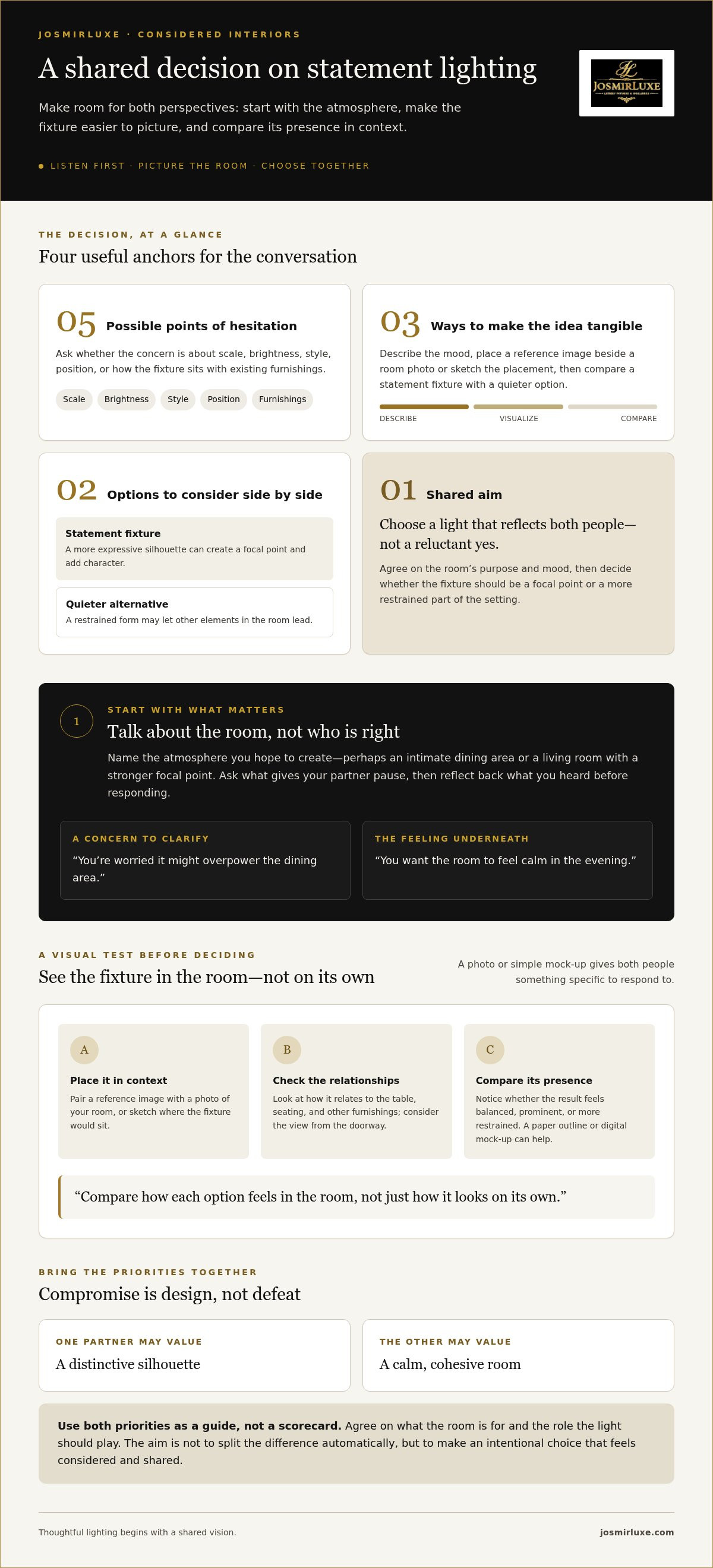
Before explaining why you love a fixture, ask what gives your partner pause. Is it the scale, the brightness, the style, its position in the room, or how it will sit alongside existing furnishings? A specific concern is easier to work with than a broad “I don’t like it.” Listen without correcting the reaction or immediately offering a counterargument.
Reflect back what you hear: “You’re worried it might overpower the dining area,” or “You want the room to feel calm in the evening.” This shows that their response has been taken seriously and helps separate the fixture itself from the feeling it brings up. The hesitation may be about its prominence, not the idea of a more expressive light. That distinction gives you something useful to discuss together.
How to present a bold lighting idea without turning it into a debate
Make the conversation about the room you both want to live in, not whether one fixture is objectively right. A few simple steps can keep the idea open to discussion rather than turning it into a case to defend.
- Describe the atmosphere. Name the feeling you hope to create, such as a dining area that feels intimate or a living room with a stronger focal point.
- Make the idea visible. Place a reference image beside a photo of your room, or sketch where the fixture would sit. Look at how it relates to the table, seating, and other furnishings.
- Compare considered alternatives. Look at the statement fixture alongside a quieter option, and discuss what each brings to the room.
“Compare how each option feels in the room, not just how it looks on its own.” A photo or simple placement mock-up can help you judge whether a design feels balanced, prominent, or more restrained. Consider the view from the doorway as well as how the fixture relates to the room’s main furnishings. This gives each partner something specific to respond to and keeps the conversation focused on the shared space.
Compare the statement fixture with a quieter alternative
Consider silhouette, visual presence, and how each option relates to the room’s existing furnishings. A sculptural outline may create a focal point, while a quieter form may let other elements lead. Neither needs to be treated as the automatic winner. If the difference is hard to judge, try a temporary paper outline or digital mock-up in the intended position before deciding.
For getting buy-in from spouse on bold lighting choices, let the comparison make the conversation more tangible, then stay curious about what each option brings to your shared space. Explore modern pendant lighting from JosmirLuxe as you consider how a considered fixture might shape the room.
Choose statement lighting together for a room you both enjoy
Before settling on a fixture, agree on what the room is for and how you want it to feel. A dining space used for long conversations may call for a different mood from a living room designed for quiet evenings. Once you share that intention, it becomes easier to decide whether the light should be a clear focal point or a more restrained part of the setting.
Home choices can carry personal meaning, especially when a space belongs to both of you. Treat compromise as design, not defeat. A deliberate choice can preserve the character one partner loves while giving the other a room that feels comfortable and balanced.
Make the final choice feel genuinely shared
Name the elements each of you values most, then use them as a guide rather than a scorecard. One partner may care about a distinctive silhouette; the other may want the room to feel calm and cohesive. Look for an option that respects both priorities, and agree on the role the light should play. The aim is not to split the difference automatically, but to choose with intention.
The heart of getting buy-in from spouse on bold lighting choices is making the final decision feel like a reflection of both people, not a concession from one. A statement pendant can bring character to a considered interior while supporting the mood you’ve chosen together. For inspiration as you shape that shared vision, explore JosmirLuxe modern pendant lighting.
Let your shared vision shape the room
A shared home takes shape through choices that reflect the people who live in it. The right statement light can become more than a striking detail; it can mark a chapter in your home’s story, chosen with care and enjoyed together. Let getting buy-in from spouse on bold lighting choices begin with the room you hope to create, rather than a need to settle who has the stronger opinion.
JosmirLuxe’s curated home-furnishings assortment includes modern pendant lighting, offering inspiration for interiors shaped with intention. Notice which forms feel at home in your shared vision, and let the next conversation begin there. Explore modern pendant lighting and imagine a room that feels unmistakably yours, together.
Frequently Asked Questions
How do I talk to my spouse about a bold light fixture without starting an argument?
Choose a calm moment when neither of you is rushed, then describe the atmosphere you hope the fixture will create. Ask what specifically gives your spouse pause, whether it’s the scale, brightness, or something else. Listen before suggesting options. That pause helps keep the conversation collaborative rather than making either person feel they need to defend a position.
What if my spouse thinks statement lighting will overwhelm the room?
Acknowledge the concern, then look together at how the fixture’s visual scale and placement relate to the room. A room image can help you picture whether it might dominate the view from the doorway or feel balanced above a table. Compare it with a quieter alternative, too. The aim is to understand the difference in presence, not dismiss your spouse’s reaction.
Can bold lighting work in a room with different decorating styles?
It can work alongside different styles, depending on the room and the choices you make together. Start with a shared palette, such as tones already present in the furnishings, and agree on the room’s purpose. A deliberate balance between the fixture and surrounding pieces can help distinct preferences coexist without requiring every element to match.
How can we choose lighting together when we have different tastes?
Each partner can name one or two priorities and one area where they’re open to flexibility. Compare a few visual options, then discuss which best suits the room’s intended mood, whether relaxed, intimate, or expressive. Getting buy-in from spouse on bold lighting choices becomes more achievable when the final decision reflects both sets of priorities. Explore JosmirLuxe’s modern pendant lighting for inspiration as you shape a shared vision.