

What if the secret to a truly modern home isn't more minimalism, but a single, ancient masterpiece resting underfoot? Many design enthusiasts fear that decorating with oriental rugs in a modern home will make their space feel dated or heavy. You likely worry that these intricate patterns will clash with the clean, architectural lines of your designer furniture or luxury marble dining table.
We understand the hesitation to introduce bold heritage motifs into a carefully curated, airy environment. Yet, at JosmirLuxe, we believe a hand-knotted Persian rug provides the vital textural contrast that prevents a minimalist home from feeling sterile. This 2026 style guide promises to show you how to blend ancient craftsmanship with contemporary aesthetics. You'll learn to embrace the shift toward warm, earthy palettes like ochre and clay, ensuring your space feels layered and intentional. We'll also help you identify authentic pieces that serve as both a cultural legacy and a sound long-term investment for your lifestyle.
Key Takeaways
- Master the art of decorating with oriental rugs in a modern home by balancing intricate heritage patterns with clean, architectural lines.
- Discover why hand-knotted wool and silk fibers provide the essential textural contrast needed to humanize minimalist luxury interiors.
- Learn how to use oversized rugs to anchor designer sectional sofas and frame luxury marble dining tables for a cohesive, layered look.
- Understand the long-term value of authentic Persian craftsmanship compared to synthetic alternatives to ensure your home remains a timeless sanctuary.
- Explore how heritage motifs act as the soul of a room, transforming a sterile space into a curated, culturally rich environment.
The Art of Contrast: Integrating Heritage into Modern Minimalism
True luxury often reveals itself in the tension between the old and the new. When decorating with oriental rugs in a modern home, you aren't just placing a floor covering; you're introducing a dialogue between historical artistry and contemporary precision. Intricate Persian patterns thrive in minimalist environments because they provide the visual complexity that clean lines often lack. Without this textural layer, a high-end space can feel unfinished or cold.
The emotional impact of these pieces stems from their materiality. Hand-knotted wool and silk fibers serve to soften the hard, reflective surfaces of modern architecture like floor-to-ceiling glass or polished stone. By defining a clear focal point, an authentic rug anchors your furniture arrangement, ensuring the room feels grounded rather than floating. The soul of a room exists at the intersection of 2,500 years of weaving history and 21st-century design.
Balancing Bold Patterns with Minimalist Furniture
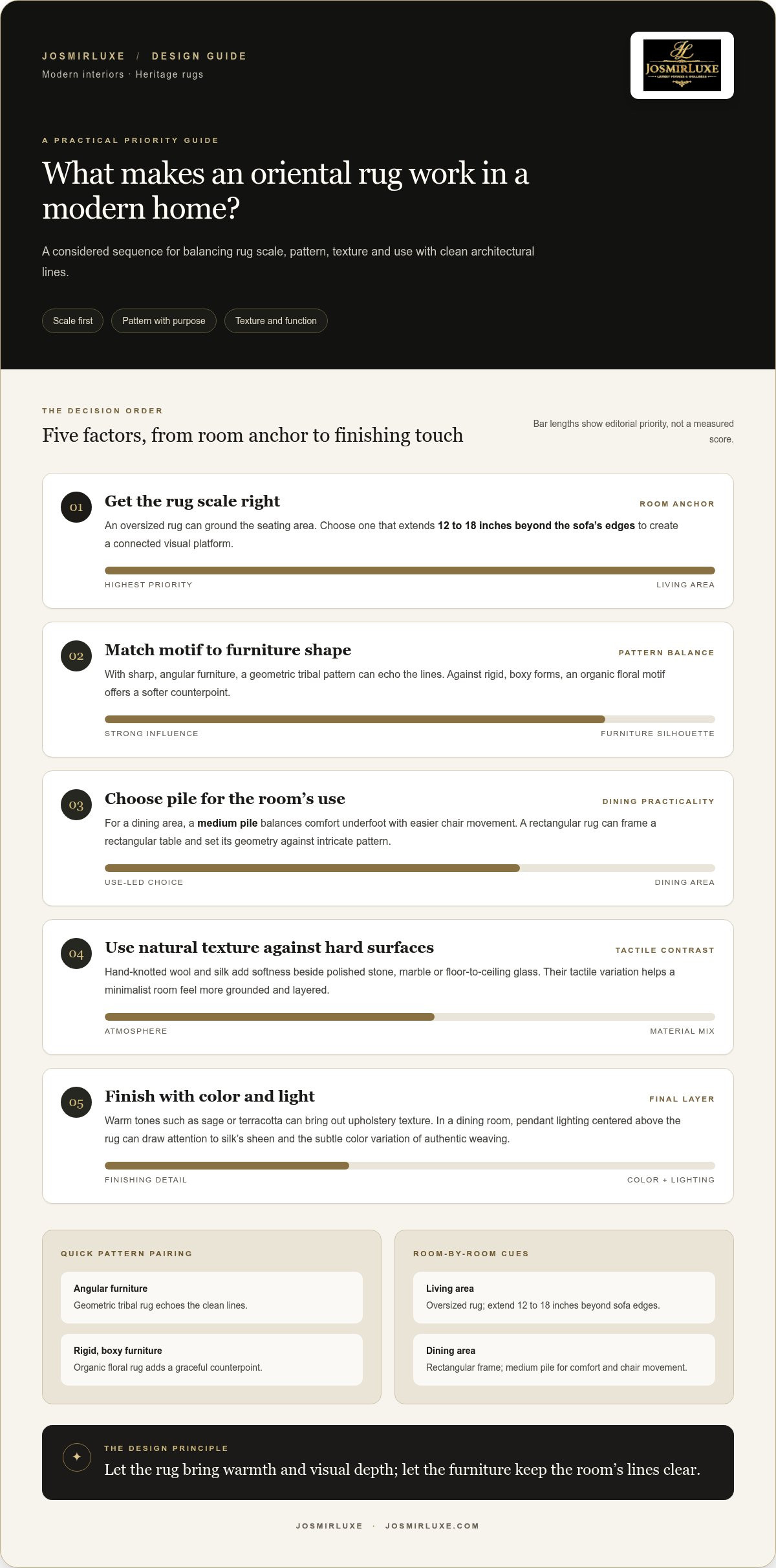
Choosing the right motif depends on the silhouette of your designer furniture. If your space features sharp, angular pieces, a geometric tribal rug can mirror those lines while adding warmth. Conversely, organic floral patterns provide a graceful counterpoint to rigid, boxy structures. For those who prefer a monochrome palette, a neutral-toned Persian rug offers subtle depth through its varied pile and the rich history of Oriental rugs woven into every knot.
The Sensory Experience of Hand-Knotted Art
A JosmirLuxe rug is a tactile experience that transcends mere decoration. Moving beyond the visual, the luxury of a high-knot-count piece is felt in the density and resilience of the weave. We value the organic irregularities found in hand-spun wool, as these "perfect imperfections" offer a necessary human touch against the backdrop of factory-perfect finishes. It's this sensory layer that transforms a house into an elevated sanctuary.
Curating the Atmosphere: Strategic Placement for Modern Living
Anchoring the Designer Sectional
To create a sanctuary in the living area, pair large-scale designer sectional sofas with oversized rugs. A common error is choosing a rug that is too small, which makes the furniture look disconnected. Aim for a rug that extends at least 12 to 18 inches beyond the sofa's edges. This creates a visual platform of luxury that grounds the entire seating area. Consider color-blocking with 2026's favored warm tones, such as sage or terracotta, to highlight the texture of premium upholstery.
Defining the Luxury Dining Experience
The dining room is where geometry meets artistry. A rectangular rug provides a disciplined frame for luxury marble dining tables, highlighting the stone's natural veining against the intricate wool patterns. This interplay of cool stone and warm textiles elevates the atmosphere of the room. For these high-traffic areas, we recommend a medium pile height. It offers comfort underfoot while remaining practical for moving chairs without sacrificing elegance.
To truly reveal the depth of your investment, position modern pendant lighting directly above the rug's center. The focused glow highlights the subtle sheen of silk-blend fibers and the rich abrash variations typical of authentic Persian weaving. This curated lighting ensures the rug's artistry remains the focal point at every hour. Explore the collection to find the foundation for your elevated lifestyle.
Beyond Decor: The Lasting Value of Hand-Knotted Persian Rugs
When decorating with oriental rugs in a modern home, the distinction between hand-knotted and machine-made is the difference between a temporary accessory and a permanent legacy. Machine-made imitations lack the structural resilience and emotional depth found in authentic weaving. A curated luxury home requires pieces that possess a distinct soul, reflecting craftsmanship that automated looms simply cannot replicate. These rugs don't just fill a space; they tell a story of patience and precision.
Sustainable Luxury and Ethical Craftsmanship
In an era defined by the environmental cost of "fast furniture," authentic rugs offer a sophisticated, eco-friendly alternative. They are crafted from natural materials like organic wool and silk, colored with plant-based dyes that are entirely biodegradable. Choosing these pieces is an act of supporting artisan communities that have preserved their techniques for millennia. It represents a conscious shift away from disposable decor toward a lifestyle that honors both the planet and the human hand.
Building a Curated Home Legacy
View your Persian rug not as a simple purchase, but as the foundation of a multi-generational collection. These pieces are functional art that often gains character and emotional value over time. High-quality wool is naturally resilient. Its lanolin content creates a protective barrier against spills, making it far more durable than synthetic fibers. This longevity ensures your investment remains a centerpiece for decades, even in high-traffic modern living areas. A JosmirLuxe rug is a commitment to preserving global artistry.
The beauty of an authentic piece lies in its ability to adapt. As your style evolves or you move to a new architectural space, the rug remains a constant, grounding element. It's a rare item that bridges the gap between financial investment and personal history. Discover more about how these timeless works of art can elevate your daily experience.
Crafting Your Modern Heritage
Decorating with oriental rugs in a modern home is a journey toward creating a space that feels deeply human and intentionally curated. You've discovered how these hand-knotted masterpieces provide the essential textural contrast to balance the clean, sharp lines of minimalist architecture. By anchoring your environment with authentic artistry, you transform a house into a sanctuary that resonates with history and soul. These pieces aren't mere floor coverings; they're the foundation of a lifestyle that values longevity over the ephemeral nature of fast decor.
Discover the collection of authentic hand-knotted rugs at JosmirLuxe.
Invest in a legacy that improves your everyday living and reflects your commitment to timeless quality.
Frequently Asked Questions
Do Oriental rugs clash with modern minimalist furniture?
Hand-knotted rugs don't clash with minimalist furniture; they provide the essential visual soul that modern spaces often lack. While your designer furniture focuses on form and precision, a traditional rug introduces a layer of warmth and intricate history. This balance is the hallmark of decorating with oriental rugs in a modern home, ensuring that your minimalist aesthetic feels human, sophisticated, and intentionally layered rather than cold or unfinished.
How do I choose the right size rug for a large sectional sofa?
Selecting a rug for a large sectional requires a focus on scale and architectural proportion. A rug should be large enough to anchor the entire seating arrangement, ideally extending at least 18 inches beyond the sofa's edges to create a cohesive platform. This approach avoids the common mistake of using a small rug that makes premium furniture look disconnected. An oversized, hand-knotted piece ensures the room feels expansive and grounded.
Are authentic Persian rugs a good investment for a modern home in 2026?
Authentic Persian rugs are an excellent investment because their value is tied to rare craftsmanship and shifting market availability. In 2026, inventory already on American soil has become increasingly precious as import pressures and tariffs reorganize the global market. These pieces represent a commitment to quality that transcends fast decor. Their natural fibers and hand-knotted construction ensure they remain a centerpiece for generations, making them a sound choice for a curated luxury home.
Can I pair a traditional rug with a marble dining table?
You can absolutely pair a traditional rug with a luxury marble dining table to blend natural materials effectively. The cool, polished surface of the marble provides a stunning counterpoint to the soft, organic texture of hand-spun wool. When decorating with oriental rugs in a modern home, this combination highlights the unique patterns in both the stone and the weave. It creates a dining experience that feels both architecturally disciplined and culturally rich.