

What if the most significant risk in modern jewelry isn't the origin of the stone, but a lack of expert curation in a mass-market world? It's understandable to feel a mix of curiosity and caution when 61% of engagement rings in 2026 now feature a lab-grown center stone. While the appeal of a conscious choice is undeniable, the fear of acquiring a "worthless" asset or being misled by inconsistent quality often lingers. Understanding the common problems with lab grown diamonds is the first step toward making a purchase with absolute confidence.
We'll show you how to navigate the nuances of lab-grown diamonds and choose a piece that truly elevates your lifestyle and collection. This guide reveals how to identify superior stones and interpret the latest carbon footprint labeling standards. We'll examine the reality of resale values and the essential role of cut quality, ensuring your next selection from JosmirLuxe becomes a timeless cornerstone of your personal aesthetic. Discover more about our commitment to conscious luxury below.
Key Takeaways
- Understand how to view fine jewelry as a meaningful lifestyle asset that prioritizes aesthetic perfection over speculative market shifts.
- Learn to detect common problems with lab grown diamonds, such as subtle blue tints or hazy growth patterns, which often evade standard certification.
- Discover why professional curation is the essential bridge between a technical grade and a stone that truly resonates with your personal style.
- Gain clarity on the latest 2026 sustainability regulations and the industry's transition toward renewable energy production.
- See how choosing lab-grown diamonds reflects a modern commitment to both innovative technology and a refined, conscious lifestyle.
Redefining Value: Resale Realities and the Modern Investment
The conversation around common problems with lab grown diamonds often begins with a question of value. Many approach fine jewelry as a traditional financial investment, yet the reality of modern luxury is far more nuanced. A diamond shouldn't be viewed as a liquid asset. Instead, it's a lifestyle component. Think of it like a designer sectional sofa or a luxury marble dining table. You choose these pieces for the atmosphere they create and the comfort they provide, not for their potential resale price in a decade. For those seeking to source a wider variety of quality home goods, you can check out SUZANA SHOP. We see jewelry as an extension of your home's elegance; a wearable piece of art that defines a moment.
At JosmirLuxe, we prioritize the emotional legacy and aesthetic perfection of every stone. We believe the true worth of a piece lies in its ability to elevate your daily life and celebrate personal milestones. Resale value for these stones is a reflection of retail service and certification rather than inherent commodity rarity. While a Synthetic diamond overview confirms their identical physical properties to mined stones, their value is found in the brilliance of the cut and the joy of the wear. Understanding common problems with lab grown diamonds starts with shifting your perspective from speculation to appreciation.
The Shift from Commodity to Curation
Today's connoisseur values transparency over manufactured scarcity. We find that our clients seek an elevated lifestyle experience where ethical origins and impeccable design meet. By moving away from the commodity mindset, you can focus on the craftsmanship of the setting and the fire within the stone. It's about a curated collection that reflects your personal taste and sophisticated values.
Insurance and Appraisal Nuances
Protecting your piece is simpler in 2026 than it once was. Most premium insurers now offer comprehensive coverage specifically tailored for lab-grown stones. When seeking an appraisal, ensure it focuses on the replacement value of a high-spec specimen. This ensures that your insurance reflects the cost of acquiring a stone of equal beauty and quality, allowing you to maintain your collection's integrity without compromise.
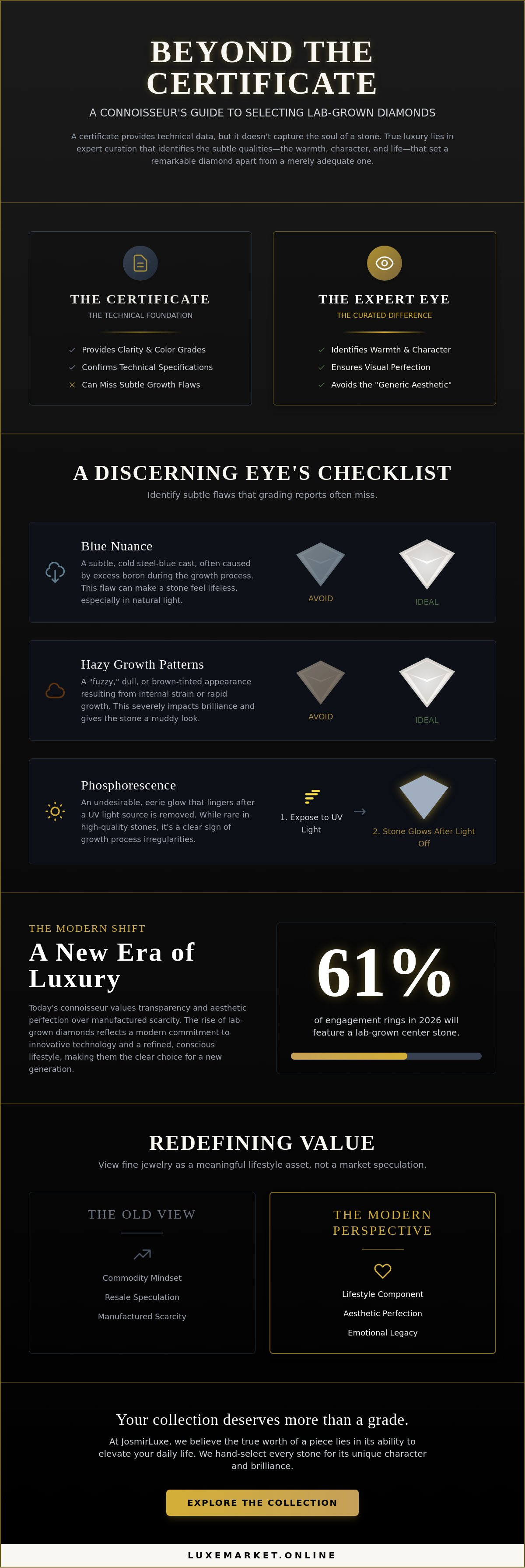
Beyond the Certificate: Avoiding the Generic Aesthetic
A certificate offers a technical foundation, but it rarely captures the soul of a stone. One of the most overlooked common problems with lab grown diamonds is the "generic aesthetic" often found in mass-produced inventory. While GIA's grading process provides essential data on clarity and color, it doesn't always flag the subtle growth defects that compromise a diamond's beauty. A stone can look perfect on paper yet feel lifeless in person.
Lower-tier stones often exhibit a distinct blue tint, a result of excess boron during the growth process. Others might appear "fuzzy" or hazy due to rapid growth cycles that create internal strain. Identifying these common problems with lab grown diamonds requires an expert eye that looks beyond the lab report. At JosmirLuxe, we hand-select every diamond to ensure it meets the standards of sustainable luxury fine jewelry. We look for stones that possess the same warmth and complexity as a rare natural specimen, ensuring your engagement ring or earrings stand out from mass-market alternatives.
The Problem with "Clinical" Brilliance
Some lab diamonds suffer from a cold, industrial flash. This happens when the cut is technically precise but lacks the artistry required to draw light into the heart of the stone. We prioritize a warm, inviting glow. It's the difference between a harsh fluorescent bulb and the soft, dancing flicker of candlelight in a room styled with our modern pendant lighting and designer furniture. We seek character, not just clarity.
A Checklist for the Discerning Eye
When evaluating a stone, movement is your best diagnostic tool. A diamond must dance under varying light sources. Be mindful of these specific visual cues:
- Blue Nuance: A subtle steel-blue cast visible under natural light.
- Brown Undertones: A muddy hue that can make even high-color grades look dull.
- Phosphorescence: An eerie, lingering glow that remains after the light source is removed.
True luxury is found in the details that a machine cannot grade. If you're seeking a piece that transcends the ordinary, explore the collection to see how expert curation changes everything.
The Ethical Horizon: Energy, Origin, and Conscious Choice
High energy consumption is frequently listed among the common problems with lab grown diamonds. While it's true that replicating the intense pressure of the Earth's mantle requires significant power, the 2026 landscape has matured. Leading producers now utilize renewable energy grids, effectively turning a technical hurdle into a triumph of engineering. This shift allows us to view these stones as more than just jewelry. They represent a bridge between worlds. Choosing lab-grown is a conscious commitment to a future where hand-knotted art and heritage and modern technology coexist in perfect harmony.
True luxury is accountable. The jewelry industry has evolved into a transparent space where origin isn't a mystery but a mark of distinction. By selecting a lab-grown piece, you aren't just avoiding the ethical complexities of traditional mining; you're participating in a narrative of progress. This level of clarity provides an emotional peace of mind that complements the physical brilliance of the stone. It's a choice that reflects a sophisticated understanding of modern value.
Transparency as the Ultimate Luxury
Knowing exactly where your diamond was grown adds a layer of sophistication that traditional markets often lack. It's about the story. When you wear a conflict-free piece, the beauty is untarnished by doubt. This transparency is the new standard for the modern connoisseur, ensuring that every acquisition aligns with a refined, ethical worldview.
The Future of Sustainable Fine Jewelry
Innovations in early 2026 have introduced rigorous carbon footprint labeling standards. These metrics allow JosmirLuxe to navigate the common problems with lab grown diamonds by curating stones that are as kind to the planet as they are striking to the eye. We believe your surroundings should reflect this same intentionality. From the jewelry you wear to the designer sectional sofas you relax on, every element of your home should contribute to an atmosphere of elevated comfort and conscious luxury. Explore the collection to find your next heirloom.
Embracing the Future of Conscious Elegance
True value in modern jewelry isn't found in speculative market trends. It lives in the enduring beauty and ethical clarity of a perfectly chosen stone. By understanding the common problems with lab grown diamonds, you can move past technical jargon and focus on what truly matters: a piece that resonates with your personal aesthetic. Just as you might explore Sneakers to find a pair that reflects your style, expert curation here eliminates visual imperfections while modern energy standards redefine sustainability. These elements transform a simple purchase into a meaningful addition to your legacy.
JosmirLuxe remains dedicated to this vision of refined living. Our curated selection of high-vibrancy stones is expertly crafted for an elevated lifestyle, reflecting a deep commitment to sustainable luxury. Each piece is designed to harmonize with your environment and your values. Explore the collection at JosmirLuxe and discover how a thoughtfully selected diamond can illuminate your world. Your journey toward a more conscious and beautiful collection begins here.
Frequently Asked Questions
Do lab-grown diamonds lose their sparkle or change color over time?
Lab-grown diamonds will never fade, cloud, or change color. Because they possess the same physical and chemical properties as mined stones, their brilliance is permanent and stable under all normal wearing conditions. You can expect your selection to maintain its fire and light performance for a lifetime with simple, regular care. It's a lasting component of your personal aesthetic that remains as vibrant as the day you first wore it.
Can a jeweler tell the difference between a lab-grown and a natural diamond?
A jeweler cannot distinguish between the two using traditional tools like a magnifying loupe or the naked eye. Only specialized laboratory equipment designed to identify microscopic growth patterns can reveal a diamond's origin. This means that the visual experience of your jewelry remains completely indistinguishable from a mined alternative to anyone viewing it. The true beauty lies in the stone's light and life, not its technical classification.
Why are some lab-grown diamonds so much cheaper than others of the same grade?
Price variations often stem from the quality of the growth process and the presence of subtle visual defects. Some of the most common problems with lab grown diamonds include blue tints or internal graining that don't always appear on a basic certificate. Stones that are hand-selected by JosmirLuxe for their warmth and clarity naturally command a premium over mass-produced, clinical alternatives that lack character.
Is it possible to upgrade or trade in a lab-grown diamond in the future?
Upgrade options vary by retailer, so it's essential to check individual store policies before your purchase. While lab-grown stones offer incredible value at the point of sale, their resale market is still maturing in 2026. We recommend choosing a piece you intend to cherish as a permanent part of your collection rather than a temporary asset. Focus on the lifestyle transformation and daily joy the piece provides.